


In 2026, one of the strongest pushes into embodied intelligence is coming from an unexpected group: home appliance companies.
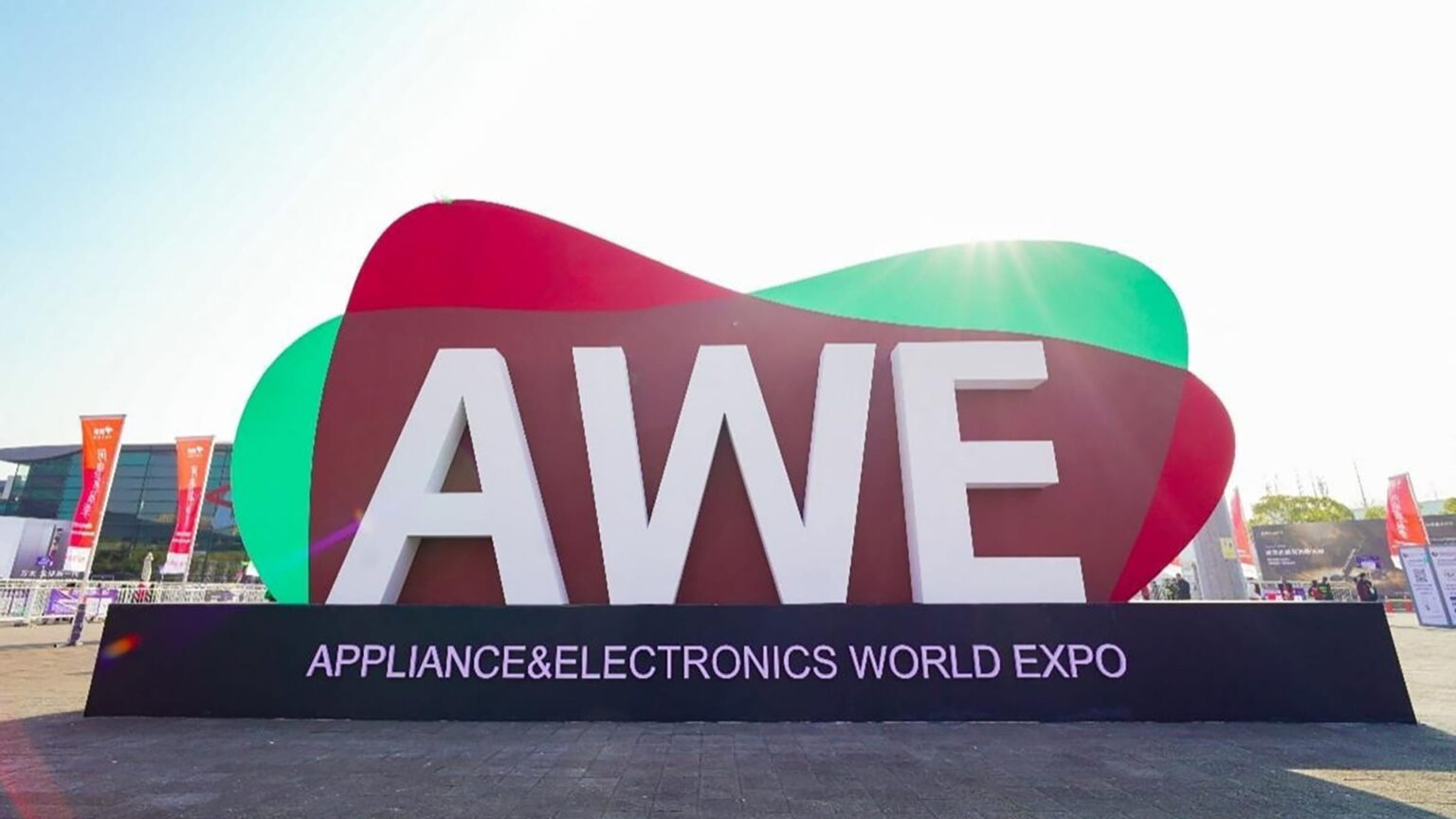
From March 12–15, the Appliance & Electronics World Expo (AWE) took place in Shanghai. Unlike in previous years, this year’s event centered less on traditional appliances and more on embodied intelligence and household robots.
Large and small appliance makers, with access to consumer touchpoints and household data, are increasingly positioning home services as a core use case for robots. At the show, companies demonstrated functions including home patrol, elder care, basic housework, and cooking.
After testing the products on site, 36Kr found that many of those functions remain at an early stage. The robots generally moved slowly, and their stability was still limited. Even so, the demonstrations offered a preview of what robot-assisted home life could look like.
For people who dislike housework, that future may be getting closer.
Dreame: A wheeled robot designed to handle chores
At this year’s AWE, Dreame used the 7,000-square-meter E7 hall to showcase an expanded product lineup. Alongside floor washers, robot vacuums, and small appliances, it also displayed aircraft, robots, cars, and smart glasses. The hall drew heavy foot traffic throughout the event.
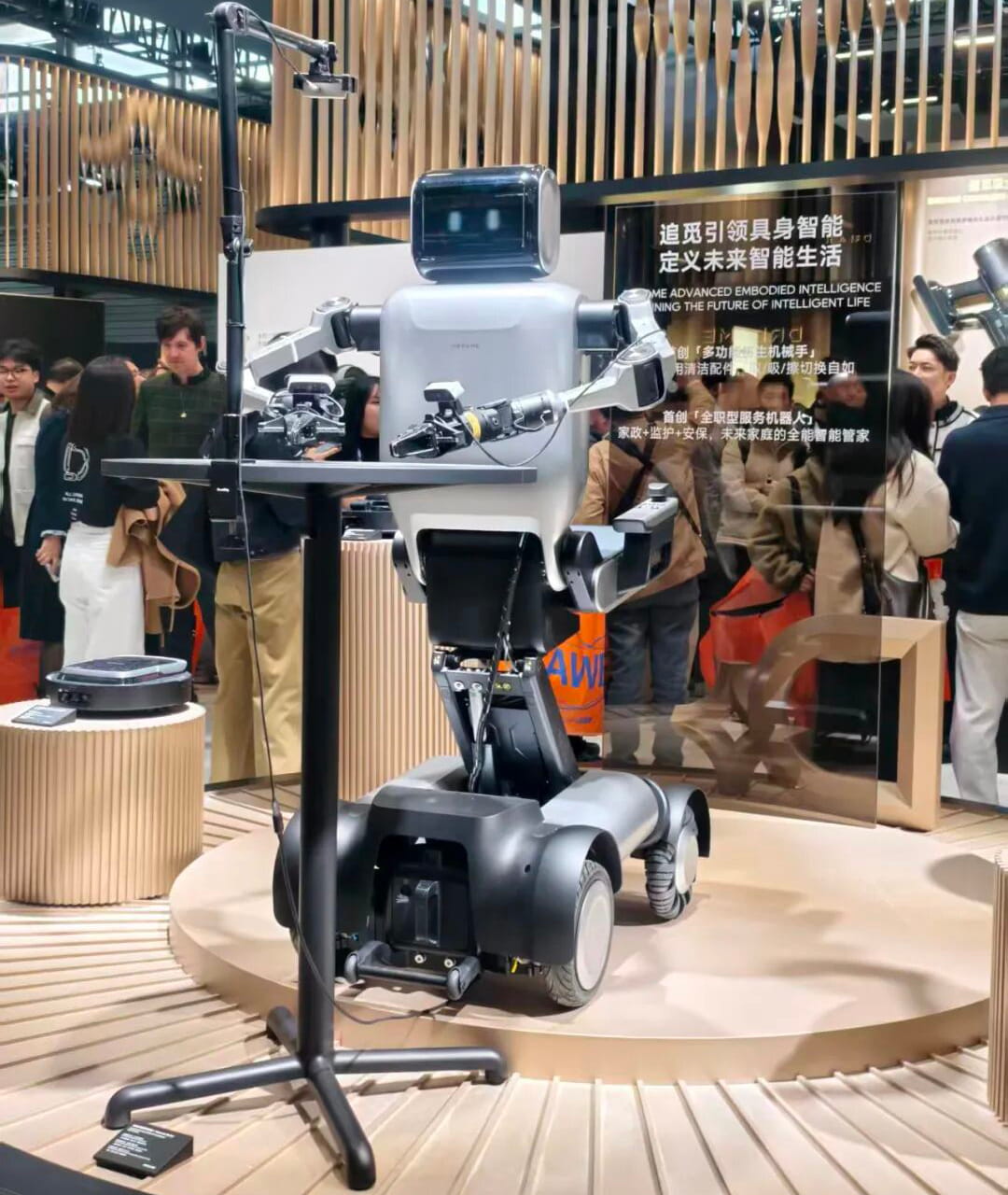
Dreame also presented what staff described as a “wheelchair robot.” According to booth staff, the four-wheeled robot can move between spaces such as a bedroom and a balcony. They added that older users could also use it as a wheelchair at home.
The robot is equipped with a pair of multifunctional bionic robotic hands. In the future, it could operate a floor washer, vacuum cleaner, washing machine, and dryer. According to staff, Dreame’s embodied AI model has developed capabilities in path planning and environmental perception, allowing the robot to understand voice commands, navigate visually, and avoid obstacles.
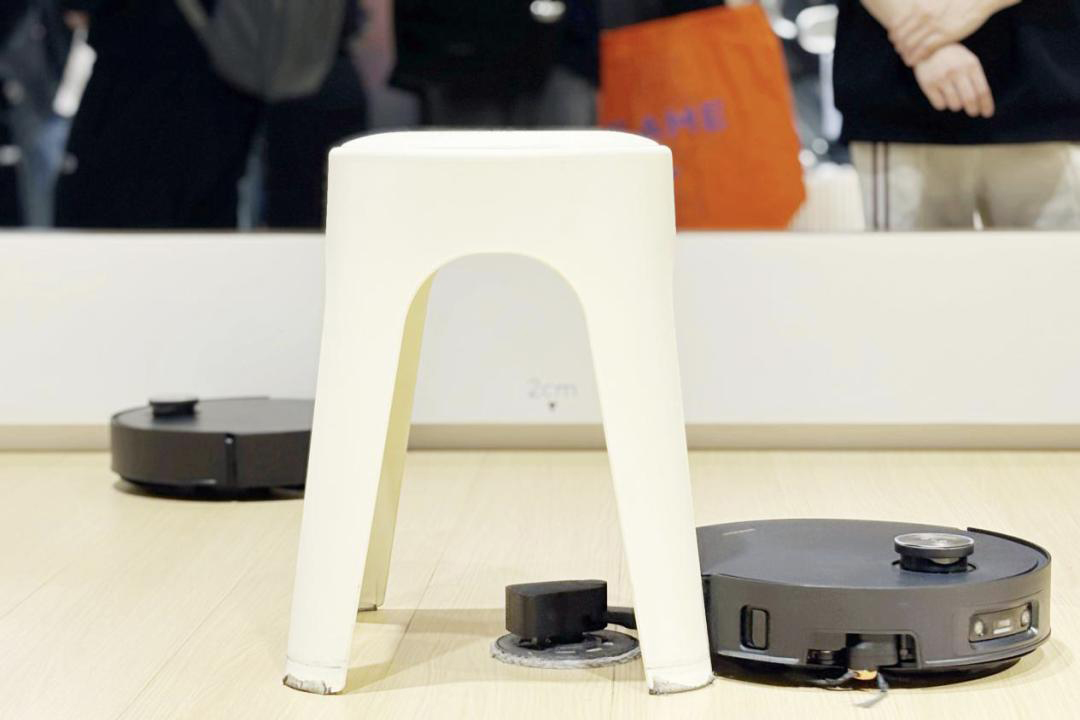
To address a common limitation of robot vacuums, their inability to clean corners, Dreame has also added a robotic arm and cleaning disc to one of its models.
At the booth, the Dreame X60 Pro moved beside a chair, extended a robotic arm fitted with a mop disc, and cleaned stains underneath it.
Ecovacs: A robot designed as the user’s stand-in at home
Ecovacs has named its household service robot Bajie. It was also the only robot at AWE connected to OpenClaw.
According to staff, Bajie was designed to act as the user’s avatar when the user is away from home.
The idea is straightforward: while at work, a user could send Bajie a message through Feishu, a workplace messaging app, asking it to tidy a table, put away toys, fetch items, arrange shoes, or place clothes in the washing machine.
In a demonstration at the show, Bajie was given the task of organizing shoes. The process was slow, however, and offered little speed advantage over doing it manually. After being connected to OpenClaw, the robot also showed some instability and needed repeated prompts.
Even so, Ecovacs presenters said Bajie has long-term memory learning capabilities. Over time, they said, it should require less repeated instruction and become more effective with continued use.
Haier: A robot that reminds users to take medicine
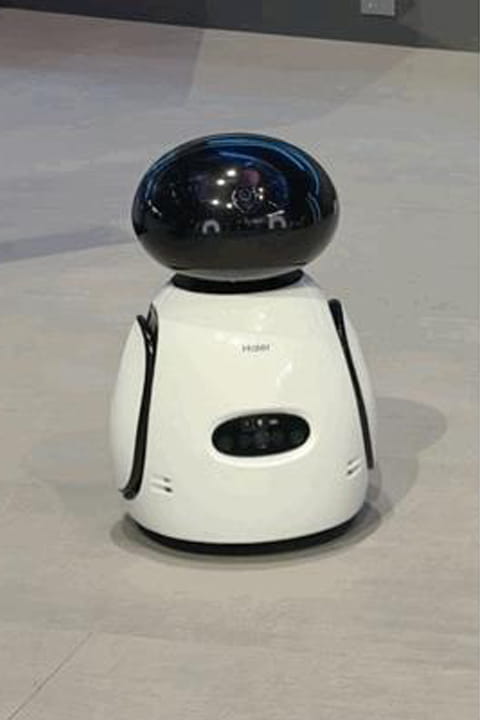
Haier displayed a penguin-shaped home companion robot.
According to the company, the robot can detect whether an older person at home has fallen and remotely alert family members. It can also remind seniors to take medicine on schedule, talk with them, and help plan daily routines.
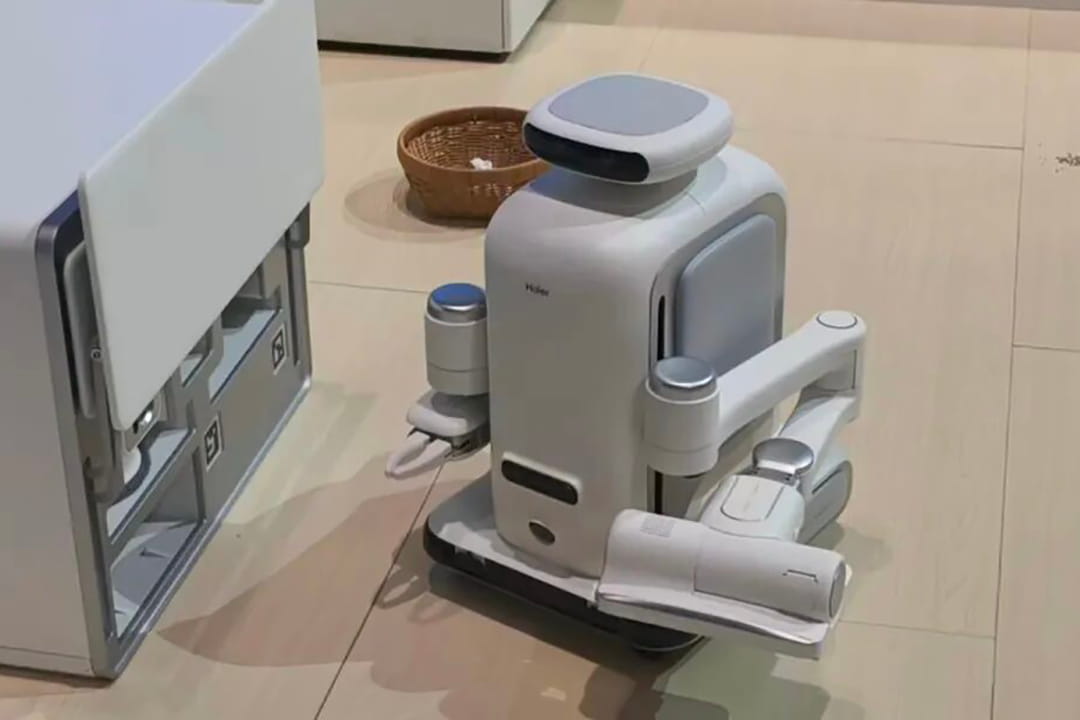
Haier also presented another type of cleaning robot.
Using dirt detection and 3D semantic perception, the robot works with a vacuum mounted on top of it to clean more effectively. According to the company, the design addresses pain points associated with traditional cleaning robots, including secondary contamination and the need for manual cleanup. It is also equipped with a gripper that can pick up trash.
TCL: A modular companion robot with interchangeable looks
TCL unveiled its AiMe robot, which drew steady interest from visitors taking photos.
AiMe’s main distinction from other companion robots is its modular design. It consists of three parts: an interactive wearable called the Mini Core, the robot’s upper body, and a charging dock.
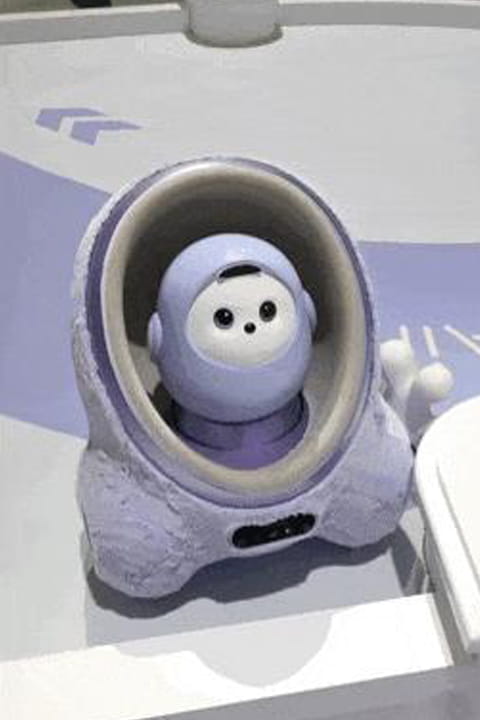
When a user is in another room, they can call AiMe by voice through the Mini Core, and the robot will return by locating the signal. Through the same device, users can also check on their home at any time from the robot’s point of view.
AiMe also offers standard companion functions. It can tell stories to children, keep people company, and hold simple conversations. It can also switch its exterior styling based on user preference.
Hisense: A butler robot for the connected home
Hisense launched three robots at the show. The most notable was its butler robot, Savvy.
Its wheeled chassis allows it to move around the home with relative flexibility. According to Hisense staff, the robot’s system has already been integrated with home appliances, allowing Savvy to coordinate with Hisense refrigerators, air conditioners, washing machines, televisions, and other devices.
In the future, Savvy could help place dirty clothes in the washing machine and start the wash cycle.
Hisense also said that when the robot detects someone watching a football match on television, it could adjust the air conditioner to 25 degrees Celsius, open the refrigerator, and bring over a can of soft drink.
Mova: A robot vacuum that flies upstairs
For people living in multistory homes, Mova’s flying robot vacuum is aimed at solving a specific problem: not having to keep a separate robot vacuum on each floor.
In the company’s showcase area, the Mova Pilot 70 lifted off, reached the second floor in about ten seconds, and began cleaning. Staff said the robot is equipped with a nine-layer protection system designed to support precise obstacle avoidance during flight.
Joyin: A home robot that can recharge itself
Joyin’s M1 robot differs from most robots aimed at household use. It stands 50 centimeters tall and can automatically mount a self-balancing scooter.
According to the demonstration, after recognizing the scooter’s QR code, the M1 can adjust its posture, align itself, latch onto the lower section for power supply, and begin moving quietly. According to the company, this helps reduce nighttime noise when robots move around the home.
In the future, the robot is also expected to support functions including mobile patrol and fall detection, allowing it to accompany older family members, monitor them, and record interactions with pets.
Tesla: Optimus V3 appears behind glass
Tesla showcased its third-generation Optimus V3 robot, which the company said is scheduled for release this quarter. Because the robot has not yet been officially launched, it remained inside a display case and was not demonstrated or made available for interaction. As a result, the crowd around it was comparable to those around other robot displays.
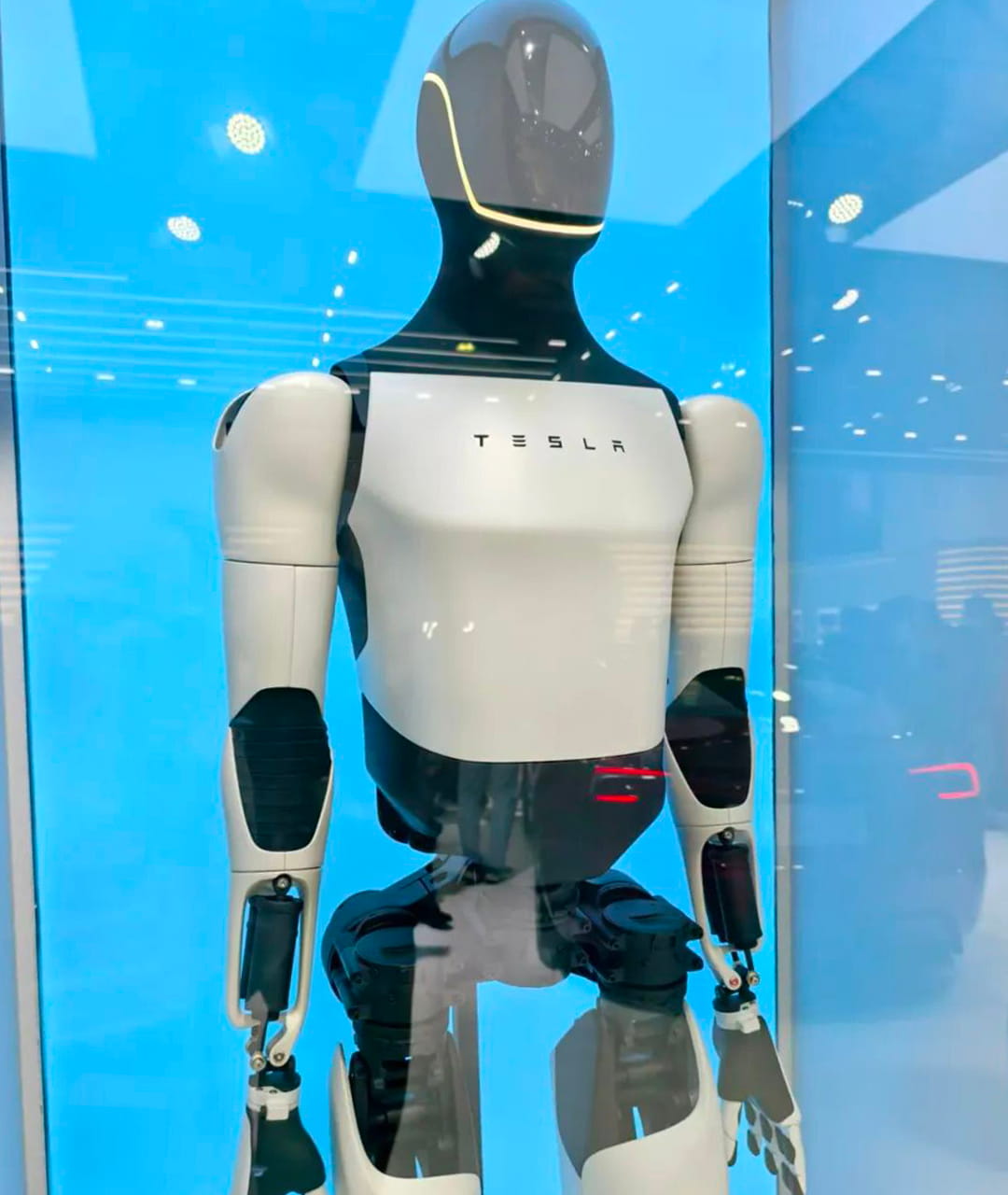
Tesla placed a sign next to the robot stating that it is the company’s first robot intended for mass production. The sign said production is expected to begin in 2026, with a long-term goal of reaching annual capacity of one million units.
According to information displayed on site, the robot will use a vision-based neural network to learn human actions from video. Tesla also said technologies already used in its electric vehicles, including batteries, electric drive systems, and AI computers, can also be applied to robots.
The company added that the robot’s future role may extend beyond factory work to home use, including child care.
Tars: A robot built for assembly work
While many of the robots at AWE were aimed at the home, Tars used the show to demonstrate factory applications.
Within 60 minutes, the company’s A1 robot operated continuously, completing the assembly of a flexible precision wire harness more than 100 times, a performance Tars claimed is equivalent to a Guinness World Record.
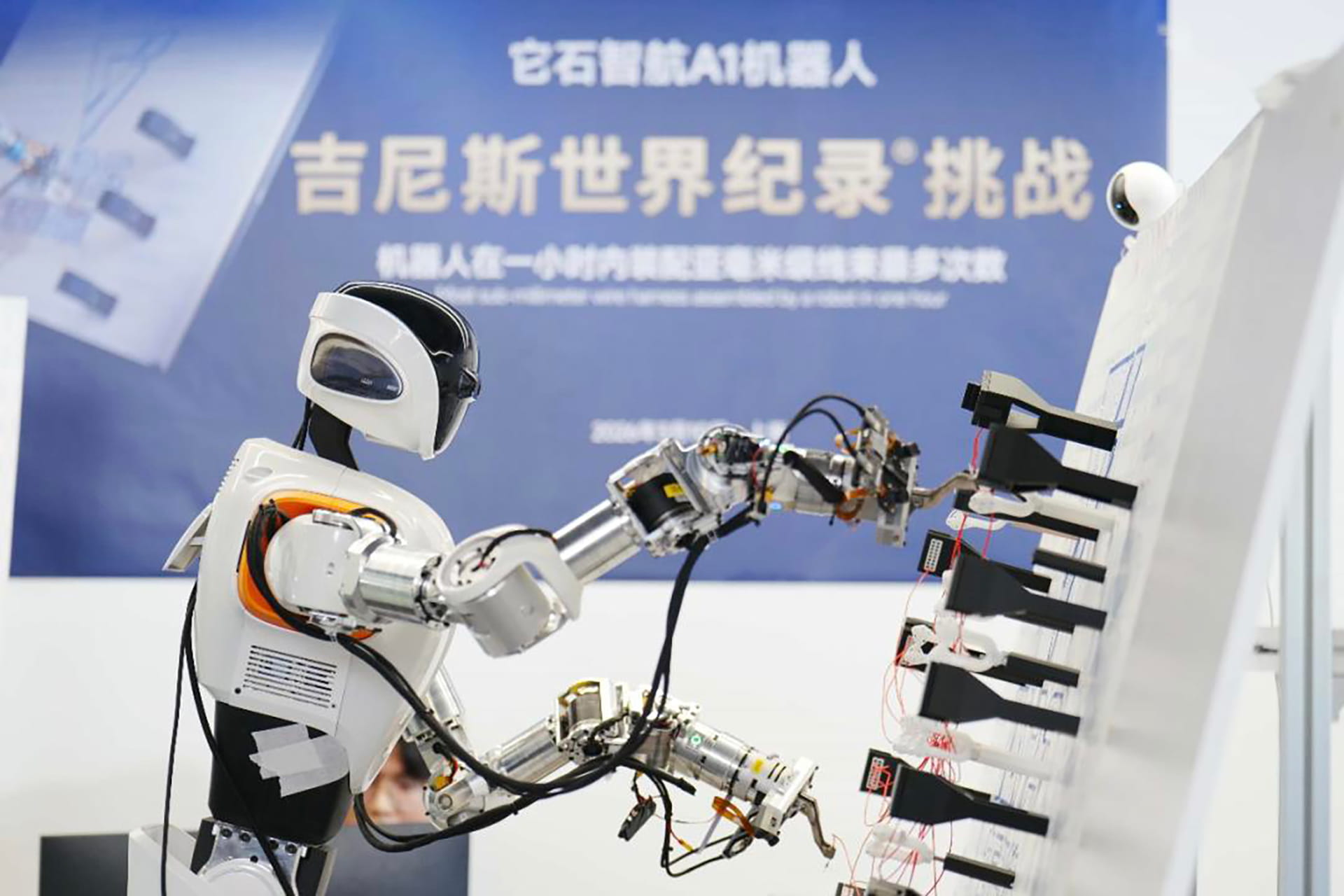
Tars also demonstrated its general-purpose embodied intelligence model, AWE 3.0. At the booth, visitors could choose a scenario and assign a task, and a large screen would display a first-person simulation of how the robot would carry it out. Using inputs such as point clouds, tactile parameters, and motion trajectories, the system visualized the environment as the robot interprets it.
Fotile: A robotic kitchen prototype
Fotile built a robotics-driven kitchen system for the show. It is structured as a closed loop of perception, decision-making, and execution:
- According to the company, the perception layer uses infrared thermal imaging, high-precision vision, and weight sensors to monitor the temperature, weight, and doneness of ingredients in real time.
- For decision-making, Fotile uses a self-developed large model trained on kitchen-specific data and a cooking knowledge graph to generate personalized diet plans.
- For execution, different robots handle different tasks inside the kitchen. A humanoid robot performs motions such as pouring oil, adding salt, heating the wok, and stirfrying, while high-precision robotic arms handle more delicate tasks, including positioning cups, dispensing water, and organizing tableware.
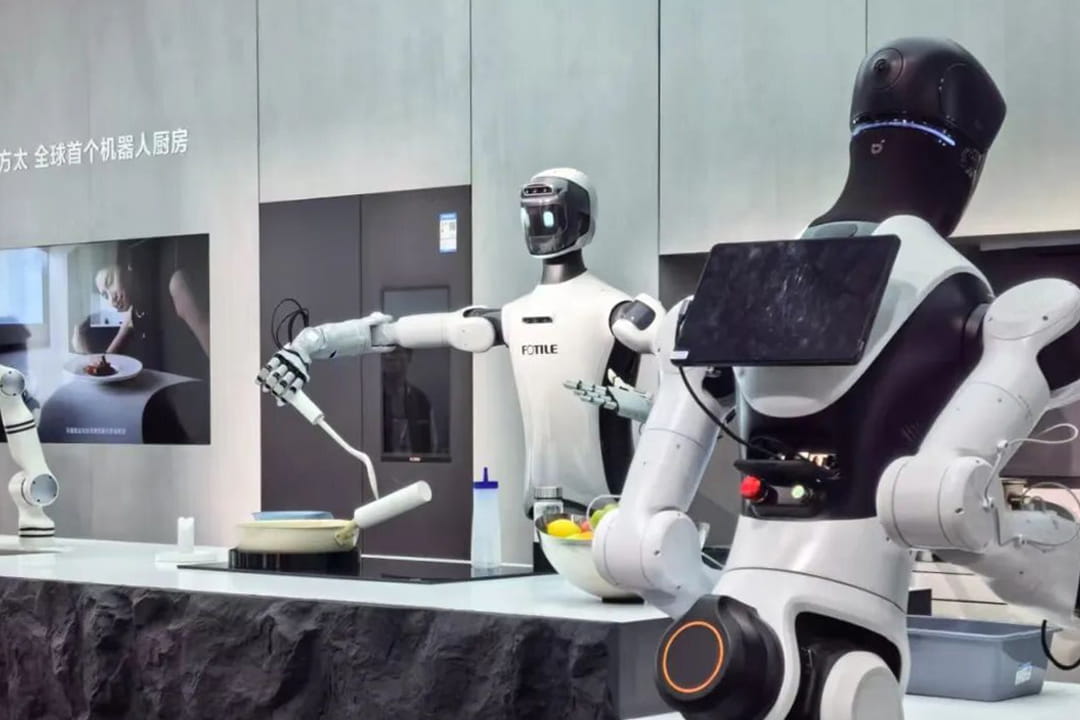
At the show, the robotic kitchen demonstrated stirfrying, salting, plating, and serving dishes. The movements were slow, but 36Kr observed that the tasks were completed successfully.
For now, however, the robotic kitchen remains a prototype, with no mass production or commercialization plan.
KrASIA features translated and adapted content that was originally published by 36Kr. This article was written by Qiu Xiaofen for 36Kr.