
Rain soaked Berlin in early September. In the morning light, the gray exhibition halls resembled a precision machine just coming to life. It was a fitting setting for a trade show focused on engineering and practical results.
Anyone coming to IFA in search of something extraordinary would likely have been disappointed. There were no flying robot vacuums or humanoid robots doing housework. Outside the entrance, the most prominent signage still belonged to perennial sponsor TCL.
Technology reporters and content creators might have found the show a little dull. Distributors and anyone furnishing a new home, however, had plenty of appliances to consider.
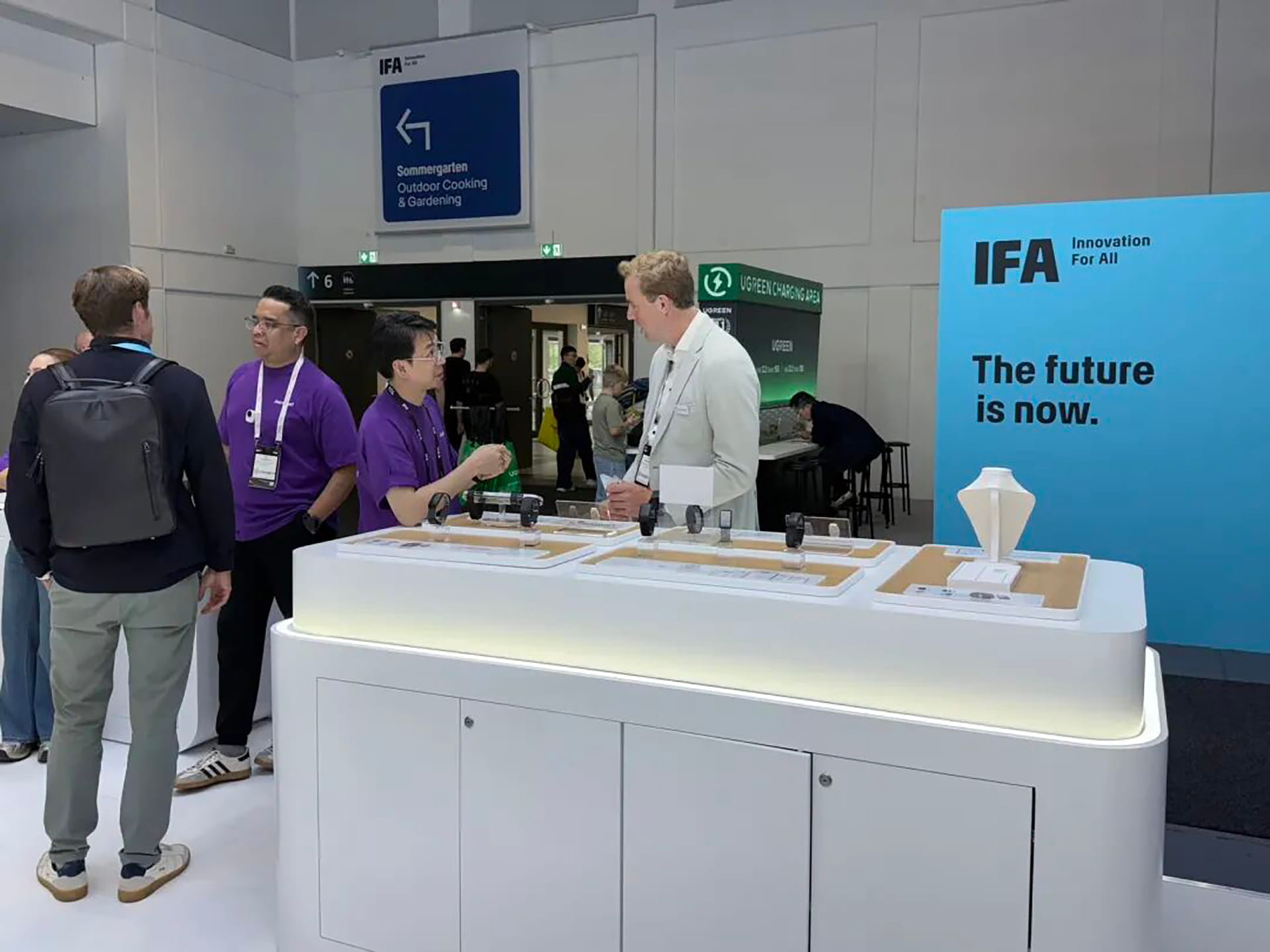
Colorful panels bearing the IFA logo filled the venue. “The future is now,” the slogan declared in large letters across the exhibition halls.
Beside each device sat a card listing its specifications and intended uses. French visitors picked up robot vacuum chassis to compare mop designs and check what the robotic arms could do. Distributors from the Netherlands and Australia crouched around a robotic lawn mower to inspect its blades.
Companies come here to find customers and do business. Technical demonstrations have to serve that purpose. The question visitors seemed to ask most often was simple: what problem can this product actually solve today?
That focus helps explain IFA’s importance to companies expanding overseas. According to the organizer, 928 companies from mainland China exhibited this year. Another 84 came from Hong Kong, bringing the Chinese contingent to more than 1,000 companies, nearly half of the show’s more than 1,900 exhibitors. Chinese participation rose nearly 35% from 2025.
Demand to attend remained strong. To travel to Germany for the show, 36Kr had to apply for visas in another city a month in advance. In the off-season, two weeks is normally enough.
Yet even amid the crowds, the show was short on news.
IFA has a different temperament from CES in Las Vegas, with its excitement and spectacle. The 102-year-old Berlin show remains serious, restrained, and practical. Little seems rushed.
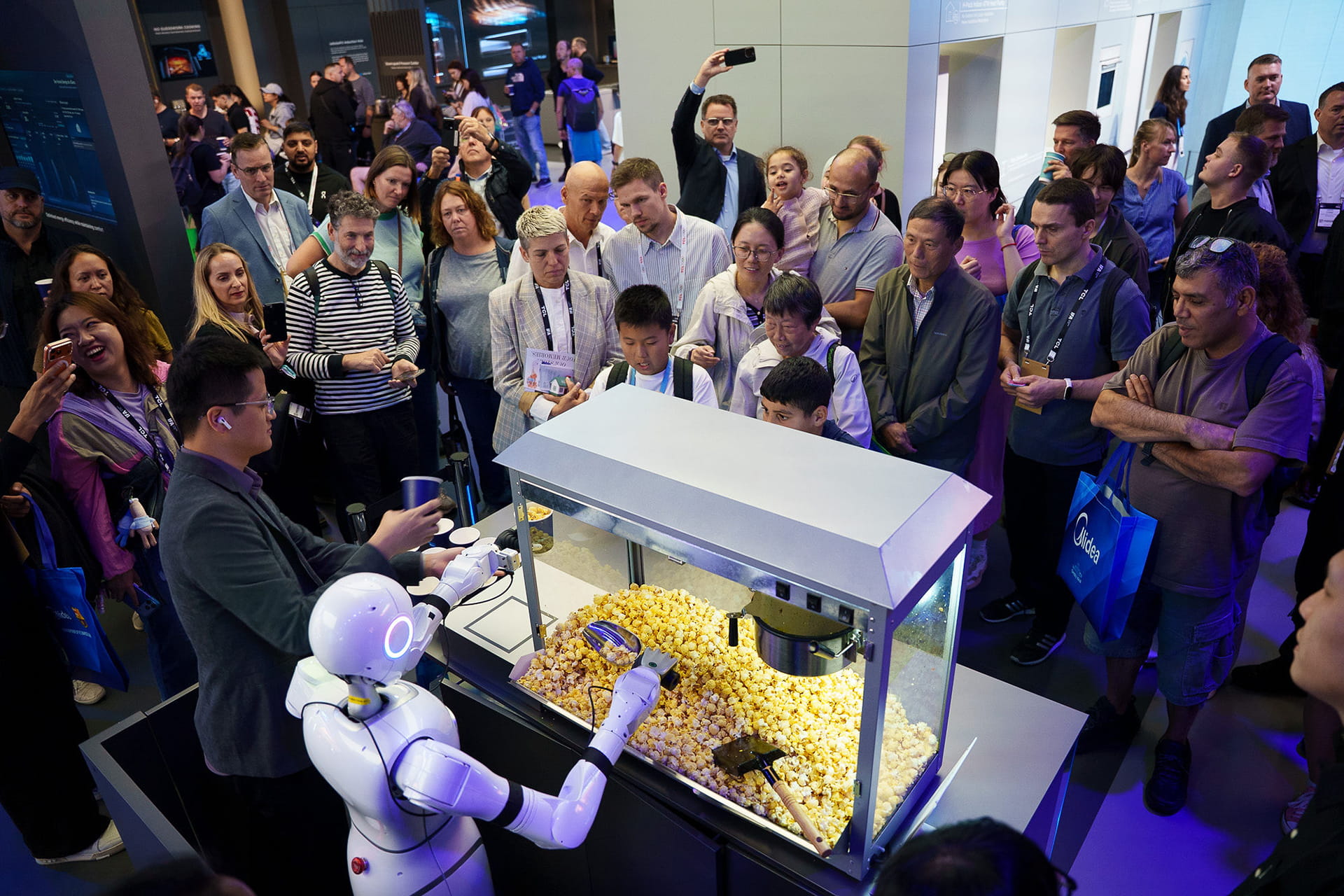
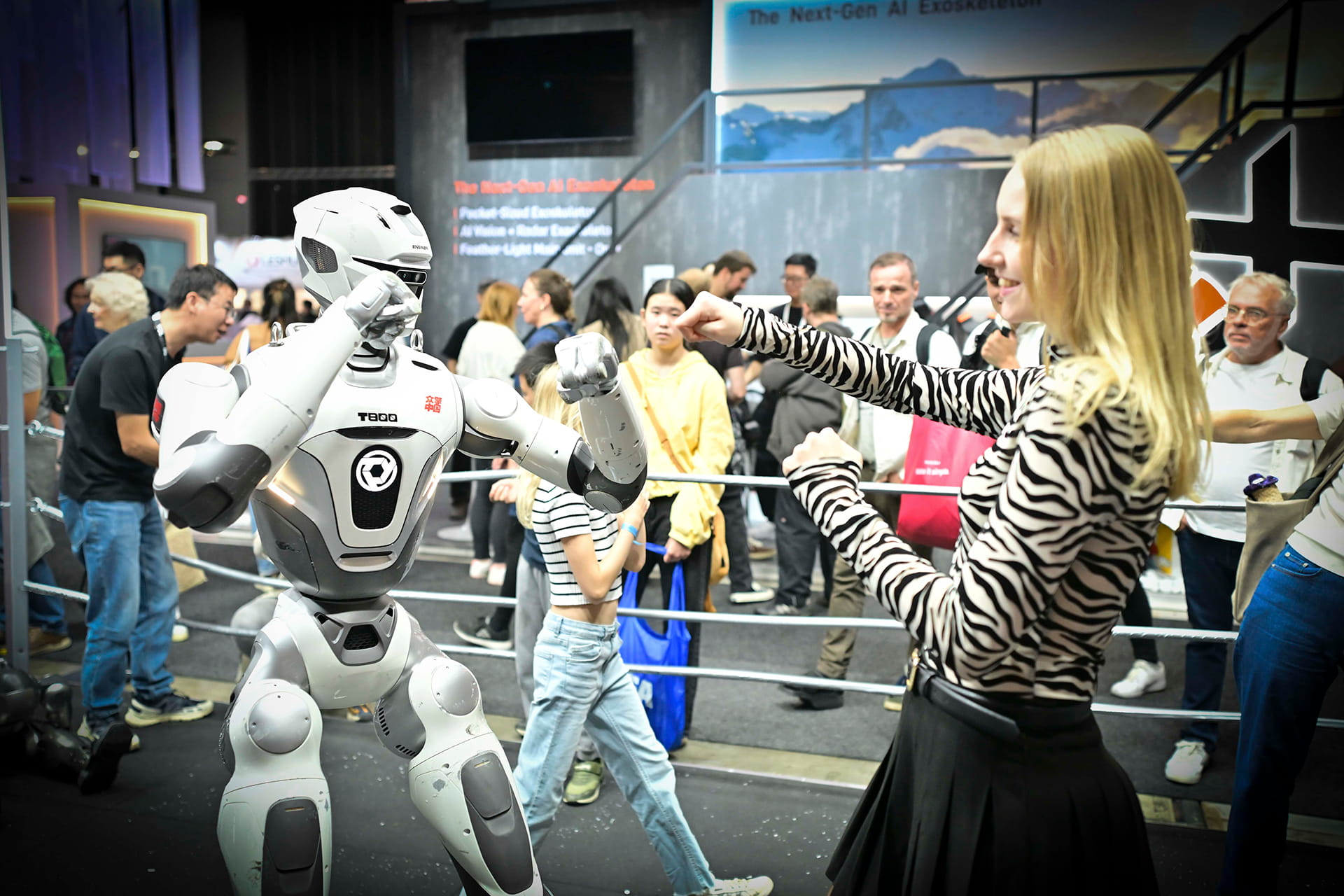
Talk about lawn mowers, not artificial or embodied intelligence
For Suisheng Technology founder Wang Shiyuan, IFA is familiar territory.
He had attended many times as an executive at Anker Innovations, following the established approach of Chinese hardware companies expanding overseas.
In 2026, he returned as the founder of an AI hardware startup, standing at a booth considerably smaller than those he had been used to.
The familiar bustle remained, but his new role changed the way he read the market.
From his perspective, Europe appeared to be lagging in the adoption of AI.
A scene kept repeating itself at Wang’s booth. When he used terms common in China, such as AI agents and memory hardware, visitors often struggled to understand what he meant.
He would simplify it: “It uses AI to build your own always-on knowledge base.”
That immediately prompted more concrete questions. How exactly do you use it? Where is the data stored? Can it fit into an existing workflow?
Meanwhile, the enthusiasm for embodied intelligence that has swept China for the past two years barely echoed through IFA.
At almost any robotics booth, there was little talk of world models or spatial intelligence. Screens showed robotic lawn mowers stopping on slippery slopes after rain, robot vacuum arms reaching between table and chair legs, and window cleaning robots following the edges of curved glass. Footage of backflips was scarce.
One exhibitor jokingly summed up the difference for 36Kr:
“In Shenzhen, if you don’t put two slides on ‘embodied intelligence’ in your deck, investors won’t even talk to you. In Berlin, if you can’t mow the lawn properly, customers walk away on the spot.”
The joke captures a regional difference in how technology is presented and sold.
European consumers’ priorities have shifted, said Ryan Kong, general manager of Willand’s European business. Its customers increasingly focus on results rather than the technology itself.
“The way visitors ask questions has completely changed,” Kong said. “They no longer keep asking about the underlying technology. Instead, they want to know, down to the level of individual components, how each part affects the final result on the lawn.”
Robotic lawn mowers have improved rapidly over the past several years, with each generation bringing changes users can see and feel. As adoption has grown, European consumers have moved from finding a suitable product to assessing the experience it offers and, eventually, choosing a brand.
Markets with widespread adoption, such as Germany, have already reached that third stage.
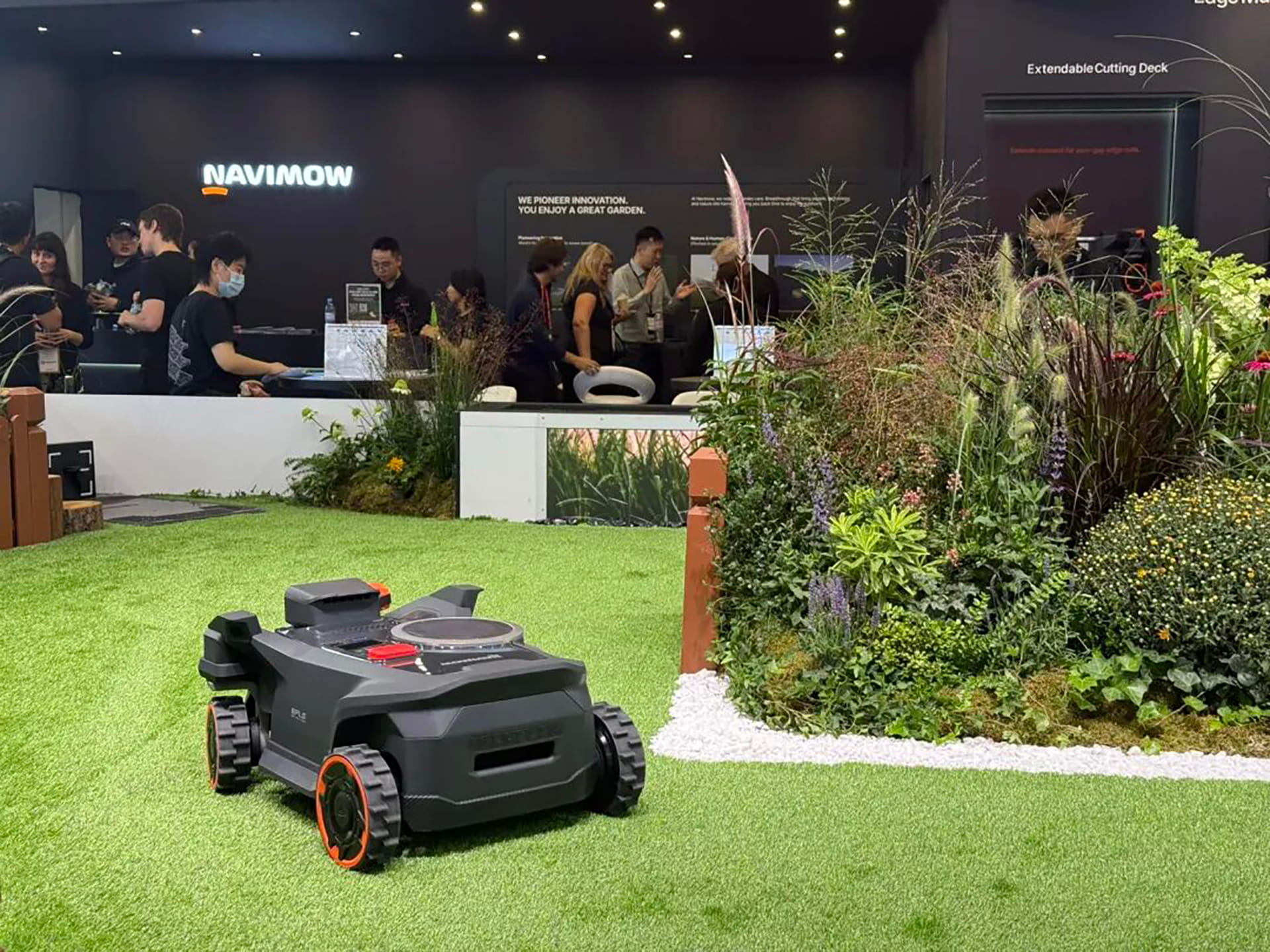
The change is directly reflected in this year’s IFA booth designs.
Willand’s pitch now extends beyond wire-free operation and three-in-one navigation to include hedgehogs. In Europe, where wildlife conservation has broad support, emphasizing the ability to avoid hedgehogs connects the product to local concerns as well as technical performance.
Mammotion displayed four product generations spanning a decade, showing what each had improved: climbing slopes, avoiding backward slips, and cutting cleanly along edges.
“Users first learn how to judge a product based on its real-world performance, and only then do they become capable of distinguishing between brands,” said Angel Feng, Mammotion’s global brand head.
Competition in robotic lawn mowers increasingly depends on delivering the experience companies promise, as well as improving specifications.
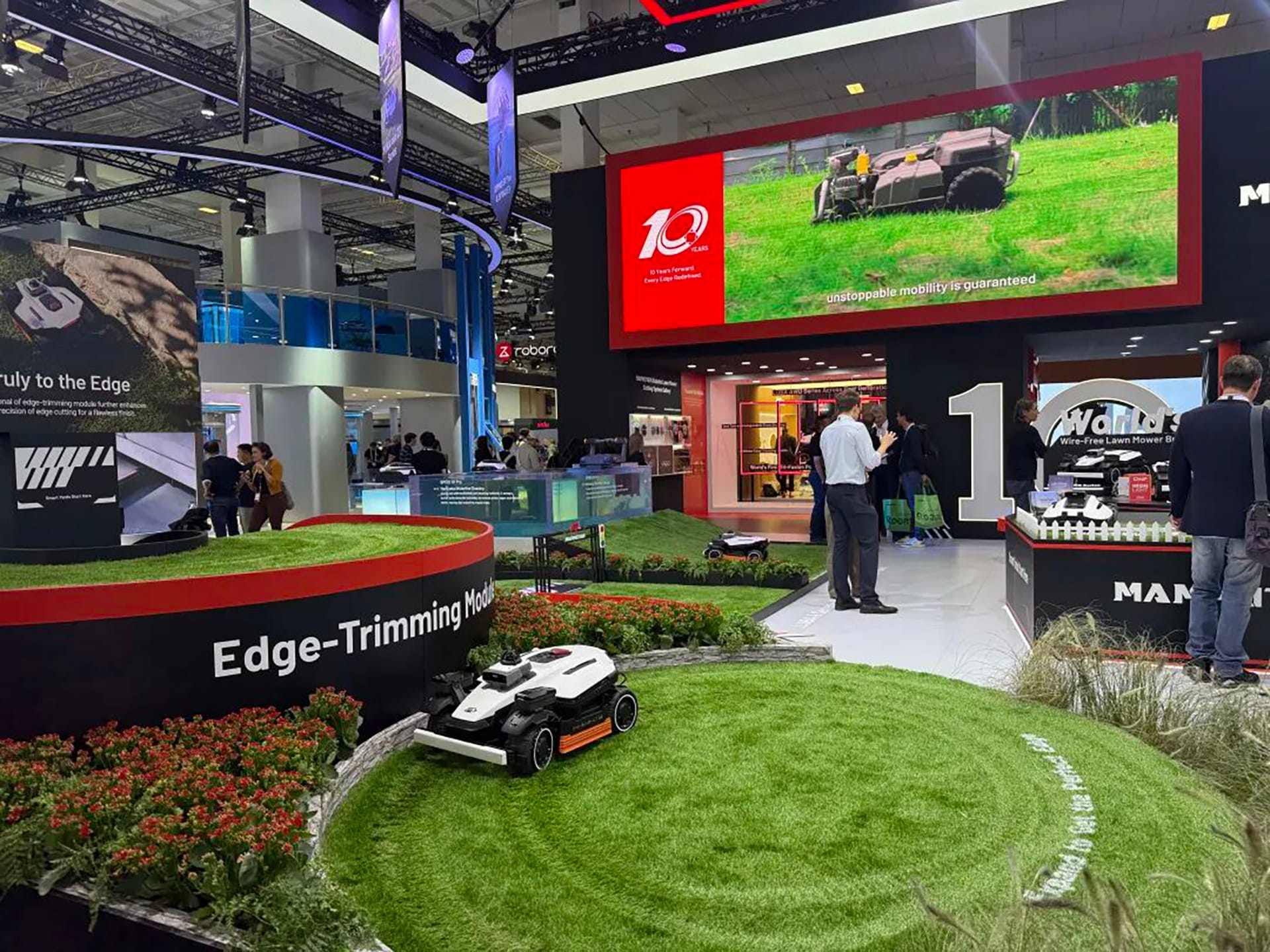
NexLawn also changed the way it told its story this year, placing greater emphasis on miniature outdoor and garden environments.
Its robotic lawn mowers planned routes through a simulated orchard, demonstrating stable positioning and autonomous navigation in a complex setting. On a lawn display, the machines climbed steep inclines to show how they controlled movement under demanding conditions.
Beyond consumer products, NexLawn also displayed commercial robotic lawn mowers for the first time this year, expanding from residential yards into professional turf applications such as golf courses and soccer fields.
These changes reveal how companies are rethinking their investment in IFA.
As consumers become more familiar with these products, exhibitors are looking beyond distribution growth. They increasingly use the show to demonstrate that their products are dependable and practical.
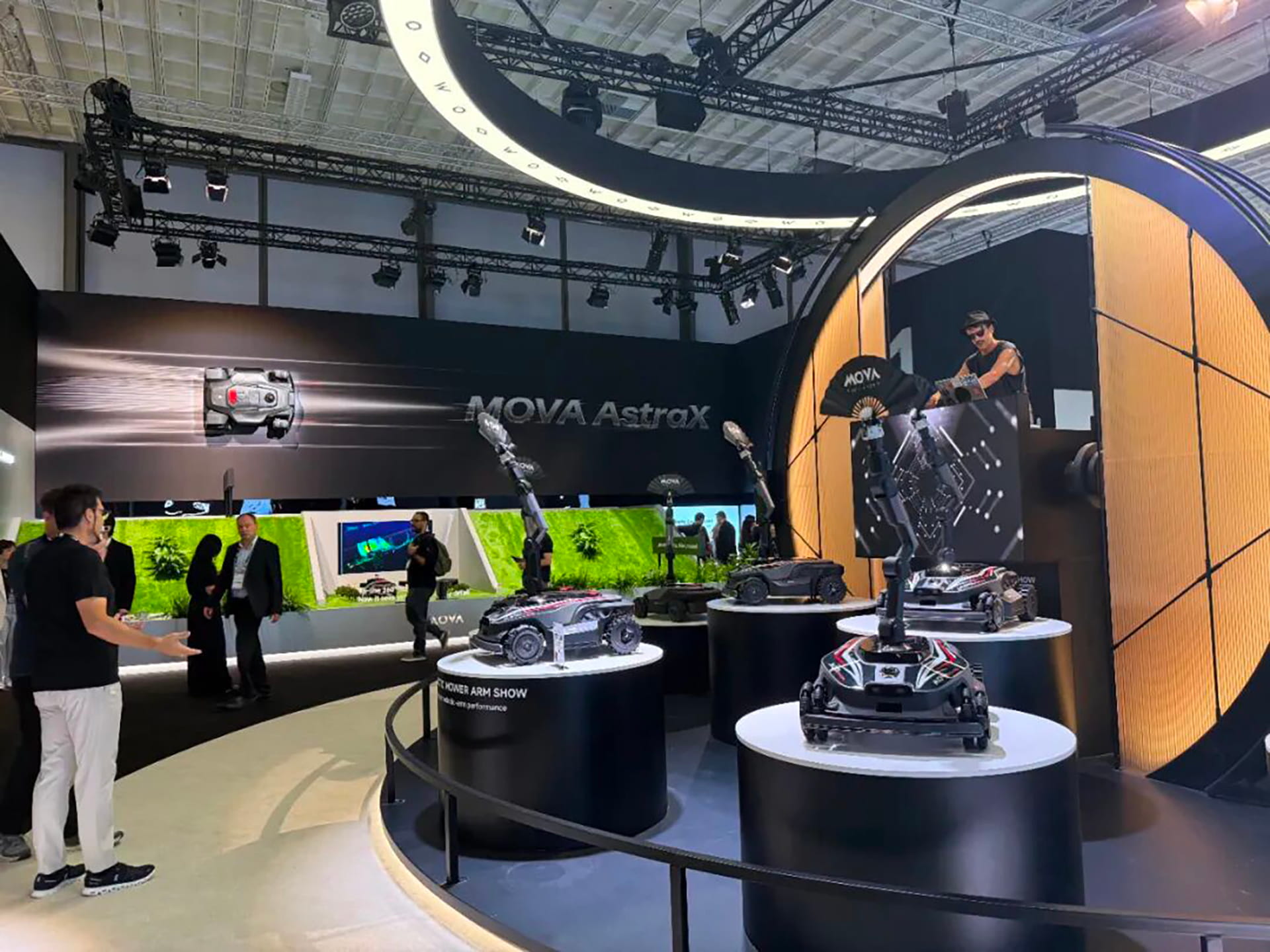
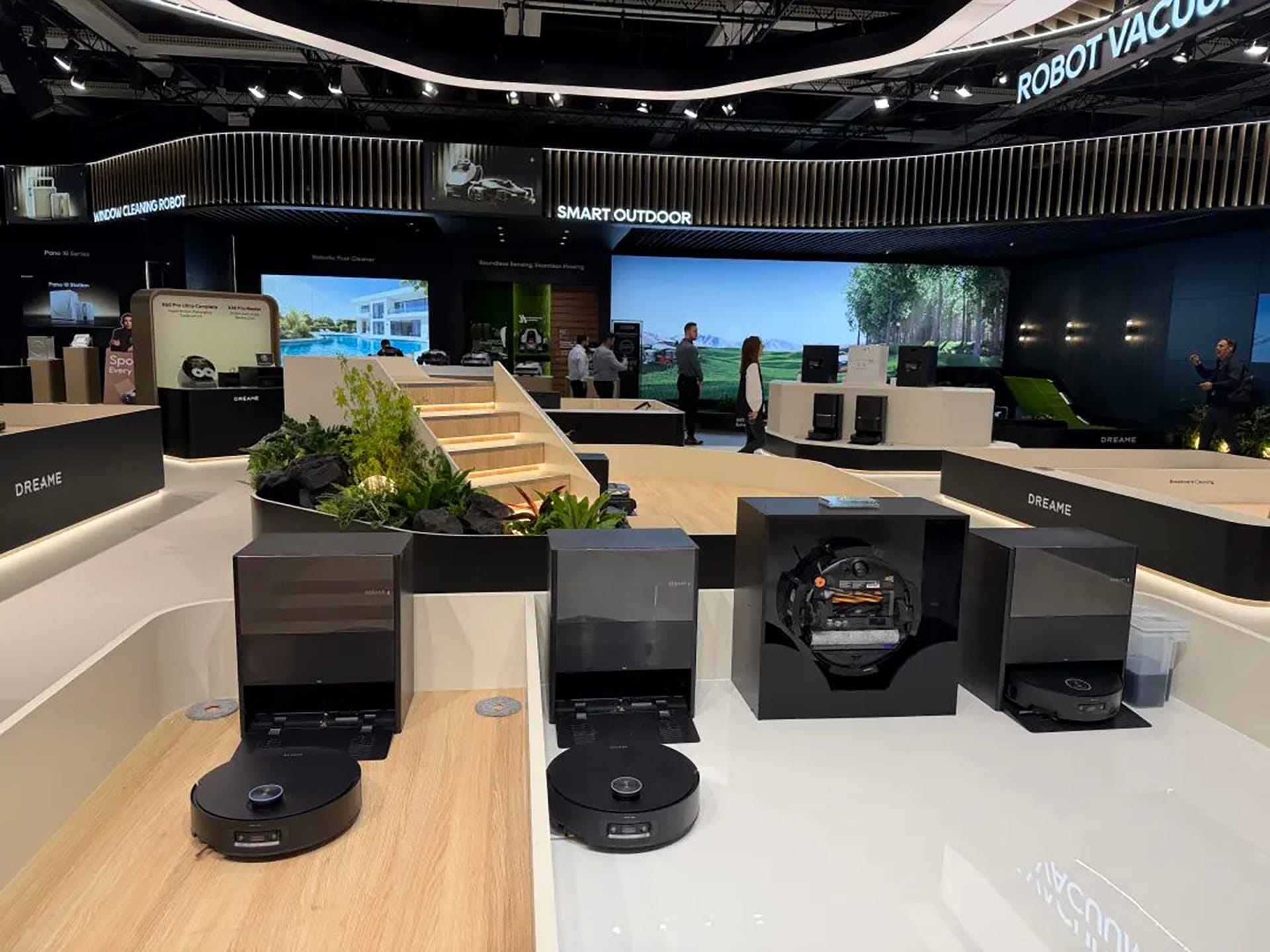
“The only yardstick in the European market is what real problem the technology solves in an actual living room or yard,” Meng Jia, president of Dreame's robot vacuum business, told 36Kr.
“Almost no one here asks which supplier makes the lidar in our robot vacuum, and almost no one asks what large model is running behind it,” Meng said.
Instead, European media and distributors tend to ask more direct questions, she found. How far can the robotic arm reach between table and chair legs? What kinds of germs does steam mopping kill? Consumers, meanwhile, are more concerned about whether the robot can avoid pet vomit.
Such questions may sound mundane in a technology exhibition hall, but they reflect how buyers assess a product’s usefulness.
Consumers and distributors examine the actions a product must perform in everyday settings and test whether each one works.
The discussion outside these halls can sound very different.
In China, embodied intelligence, world models, and the commercialization of large AI models dominate public discussion. Inside the Berlin halls, most humanoid robots stand quietly in corners, attracting interest without taking center stage.
Walking through the venue, the overriding impression is one of confident practicality.
Traditional home appliance brands occupy the largest booths. TCL, Midea, and Hisense have turned their stands into complete kitchens or living rooms, with refrigerators, ovens, dishwashers, and washing machines lined up in sequence. Visitors can open the doors themselves, touch the materials inside, and feel what it is like to shut them.
Phone accessories, portable power stations, and office equipment generate little of the excitement associated with newer categories. At trade shows in China or at CES, visitors might hurry past them.
But at IFA, each occupies its own clearly defined hall. Whatever type of product you are looking for, you can simply follow the signs and find it.
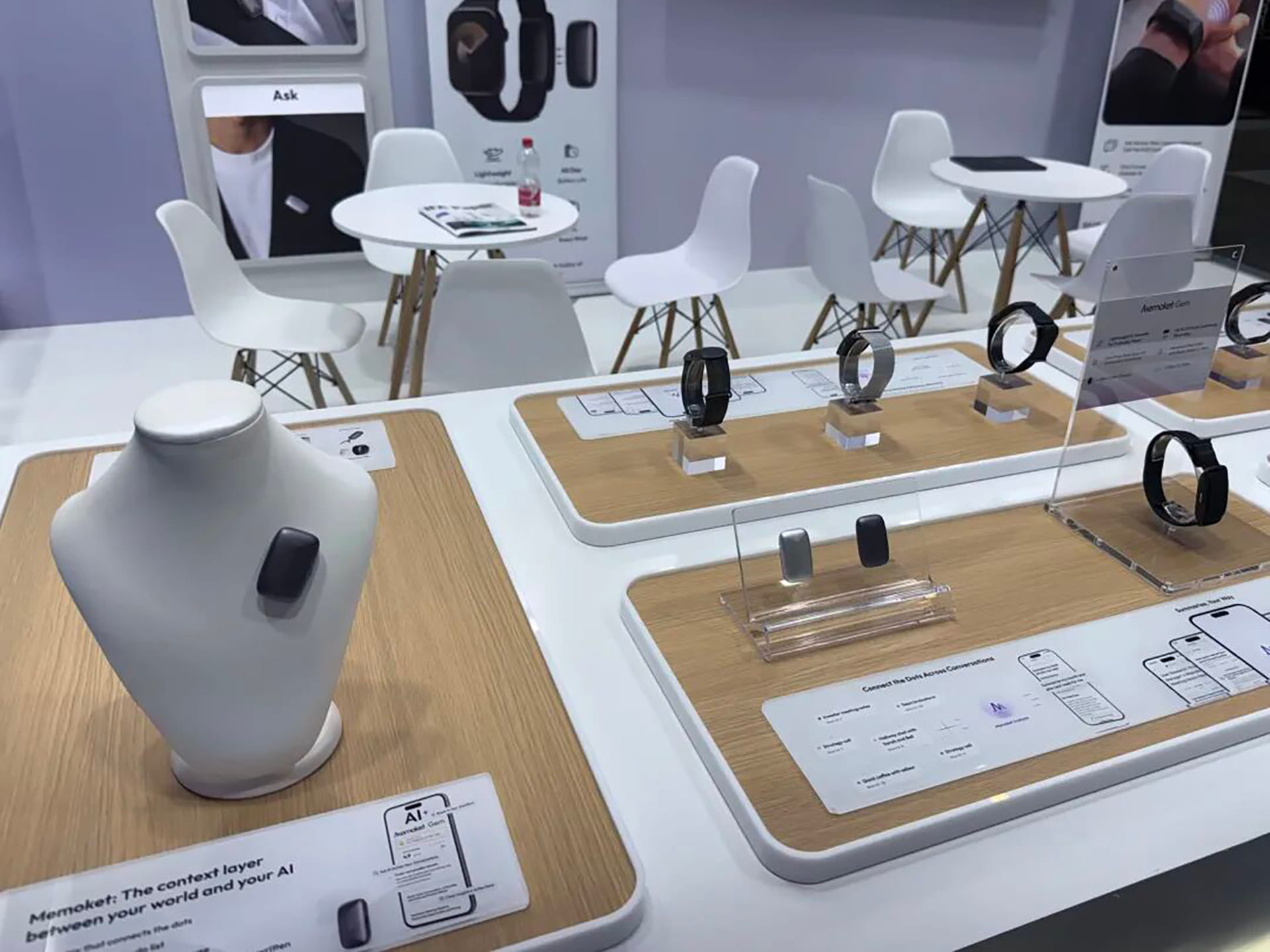
Products sit on open display with specifications and prices clearly labeled, like a retail catalog made tangible.
Concepts and prototypes have a limited presence. Most booths display finished products already in mass production.
Here, technical terminology tends to explain what a product does rather than serve as the main selling point.
AI hardware and embodied intelligence companies occupy scattered corners of the show. Beside appliance booths spanning hundreds of square meters, many have little more than a cubicle, a table, and a few prototypes.
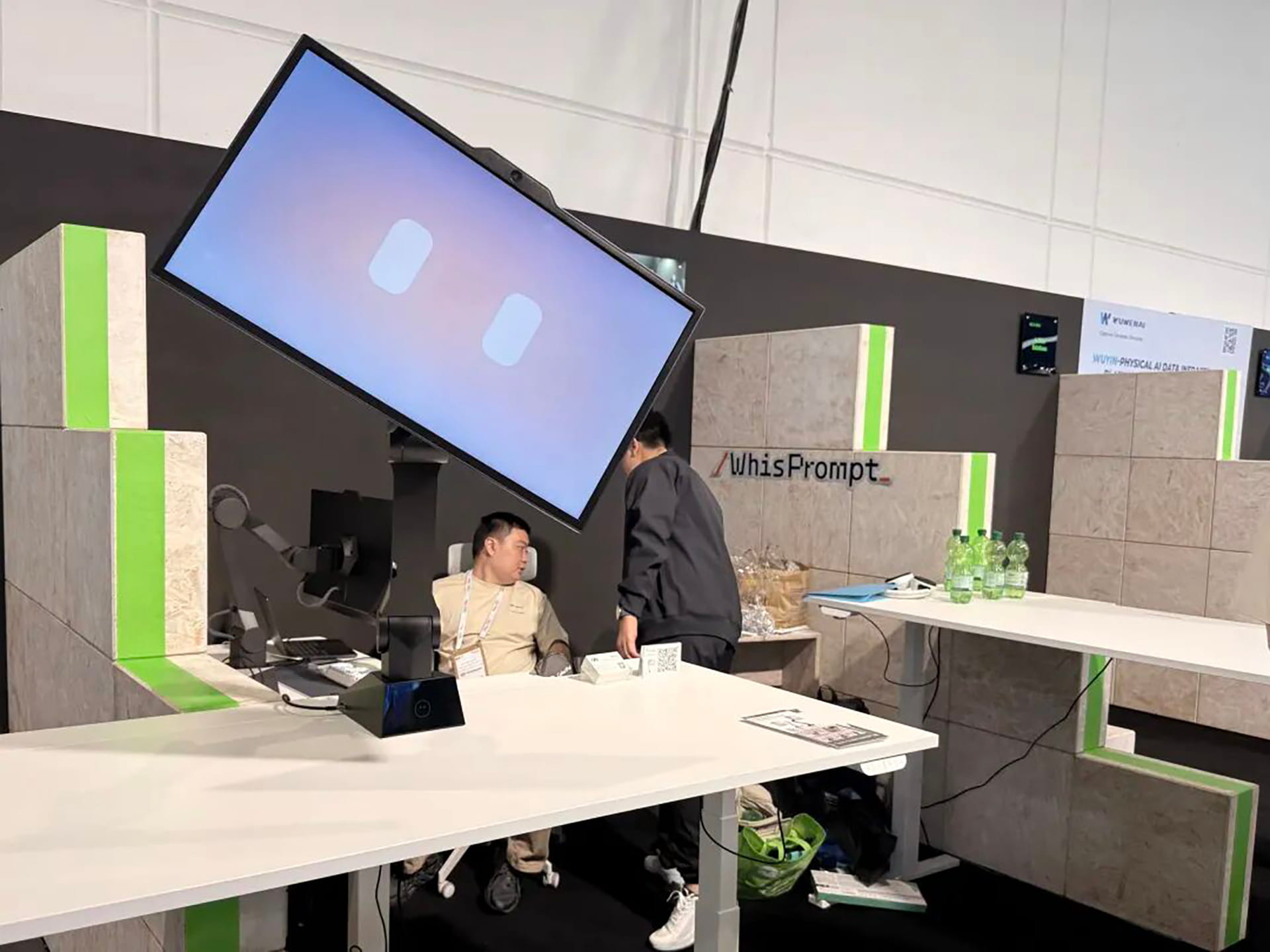
At the Looki booth, several wearable cameras were arranged across the display.
Staff spent little time explaining AI algorithms or agent functions. Instead, they stopped passersby with brief descriptions such as: “This is a travel recording camera. Wear it while you travel, walk around an exhibition, or attend a gathering, and it will automatically record things for you.”
Visitors responded in much the same way as elsewhere at the show. They were more interested in practical questions such as battery life, expandable storage, and reliability in extreme conditions.
Dreame built a household setting and used its Echo S1 single-arm wheeled robot to demonstrate a sequence of domestic tasks.
The robot identified dirty clothes scattered around the room, opened the washing machine door, loaded the items into the drum one by one, selected a wash program, and started the machine automatically.
The demonstration focused on actions tied to everyday life, without backflips or dance routines.
36Kr found there were almost no humanoid robots. Even leading company Galbot had only a few stationary prototypes on display.
Among the few still moving was a quadruped robot at MagicLab’s booth, dressed in a panda shell. Its appearance attracted attention, but visitors’ main question remained: “When can I actually buy this?”
Chinese companies have to be there
Inside Messe Berlin, Chinese exhibitors are taking up more and more space, while product launches and on-site presentations are becoming more frequent.
But the story behind those booths has changed.
Chinese companies once came to IFA with straightforward goals: establish a presence, meet distributors, and win orders. The show gave them a large audience for product announcements.
Today, competition overseas has intensified sharply.
In Europe, where physical distribution networks remain important, Chinese companies need to meet partners in person to understand their needs.
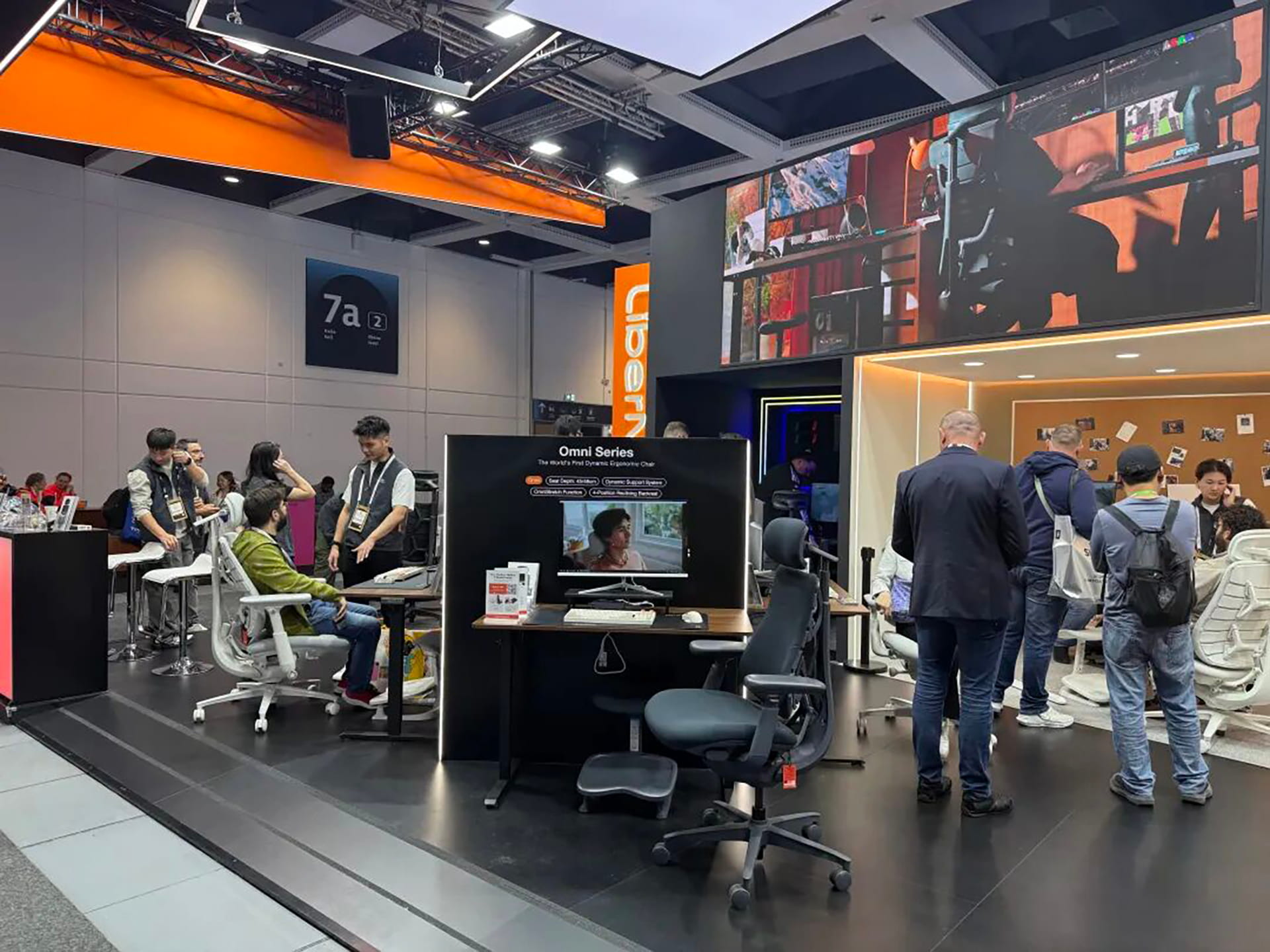
“European channel partners used to focus on value for money. Now, they increasingly care about the quality-to-price ratio,” Meng said. “Whether your brand is reliable and whether the product actually fits the habits of local European users determines how long people are willing to work with you and how the channel’s business will develop over the next few years.”
That is also why IFA attracts relatively little media attention yet remains a show manufacturers will stretch their budgets to attend.
European distributors have not developed a habit of traveling to China to select brands. For manufacturers seeking access to this relatively conservative market, the opportunity to meet buyers at IFA is a cost they have little choice but to bear.
“If you only look at the price of local services, the value for money may not seem particularly high,” a representative from Ecovacs Robotics told 36Kr. “But it is a necessary cost. There is really no way to calculate it in conventional value-for-money terms.”
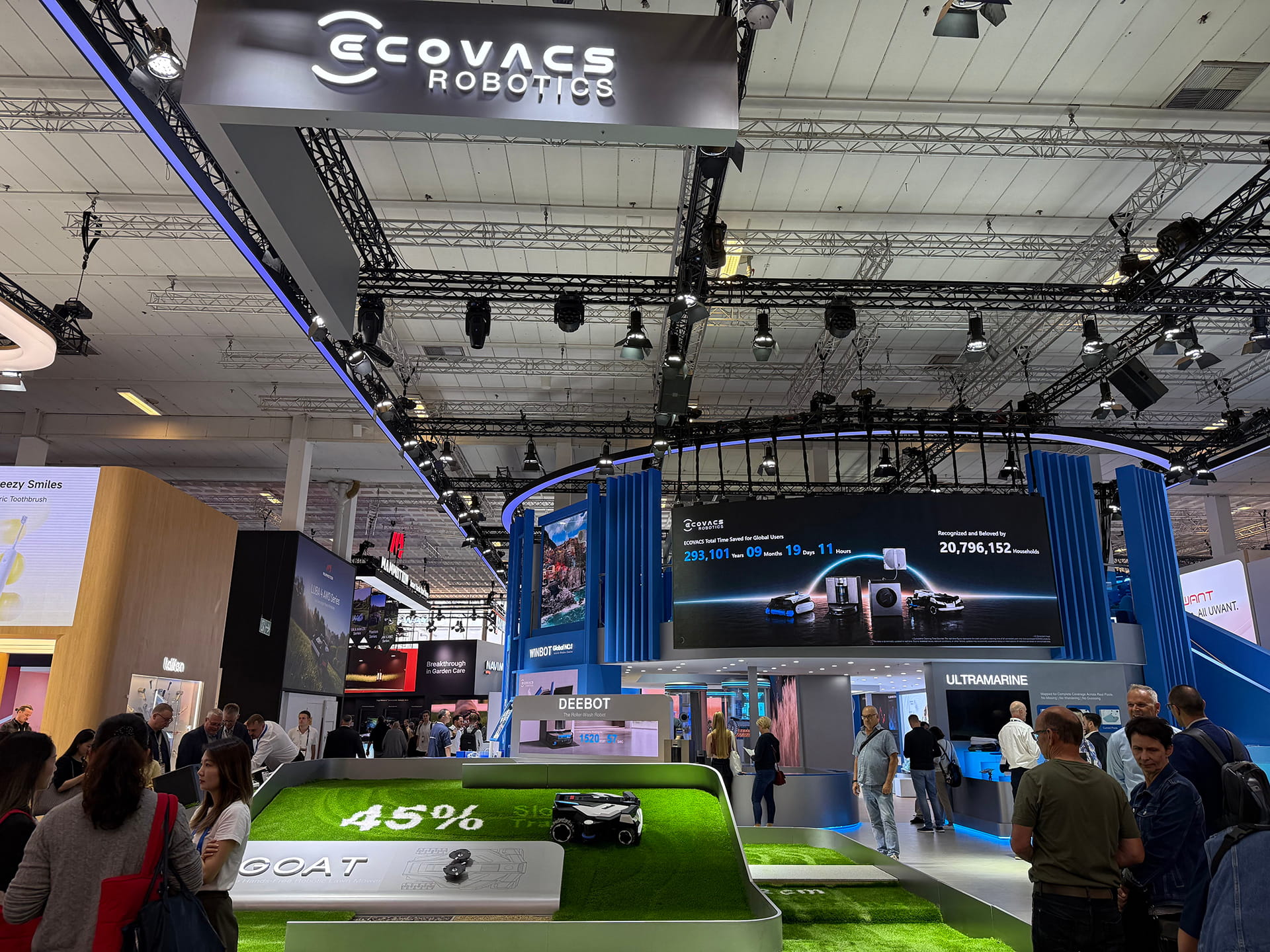
As companies scrutinize the return on their spending, they are also reassessing IFA’s value.
The objective is shifting from “getting more people to know who I am” to “getting the right people to trust me.”
Booth size alone no longer measures the value of attending. Much of the work of building relationships happens outside the exhibition halls.
“European channel partners won’t accept you because of an email or an online advertising campaign,” said Icey Bin, global brand head at Narwal. “To do business, you first have to become their ‘friend’ and establish a circle of trust.”
This year, Narwal held a separate brand event near the IFA venue, inviting selected media and channel partners from around the world.
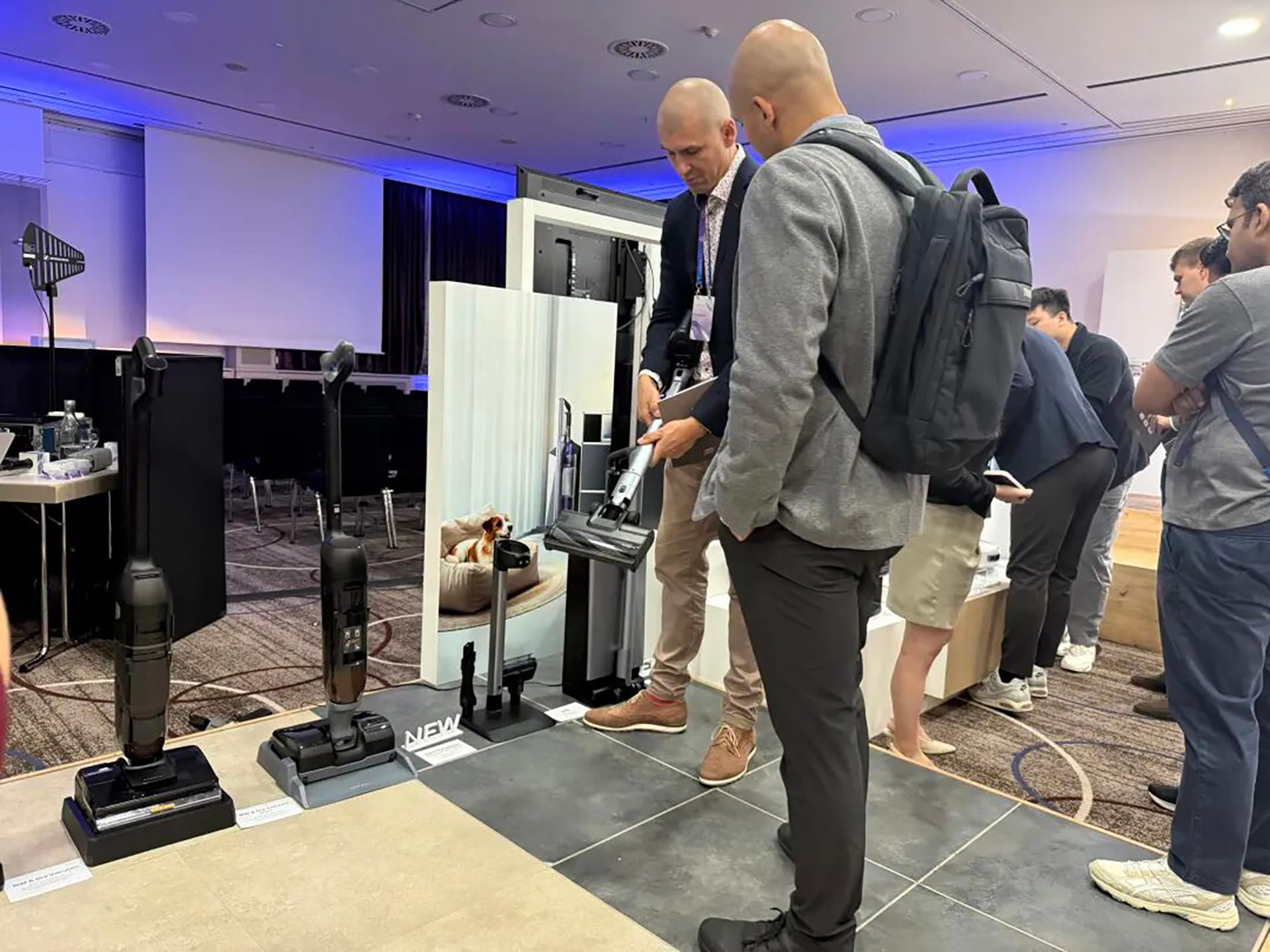
A Midea representative similarly told 36Kr that, for the company, IFA is “an important touchpoint in the long-term development of the European market, rather than an isolated marketing event.”
That positioning determines how the company evaluates the show.
“It’s not about how large the booth is or how many orders are signed on-site. It’s about the quality of conversations with customers, brand influence, and the business opportunities that follow.”
Success in Europe generally requires more than a modest initial investment and the hope of a breakout product.
Conversations and demonstrations make a brand visible. Reaching the shelves of major retailers requires a broader set of capabilities tailored to the local market, developed beyond an annual appearance at a trade show.
The real test only begins after the end of IFA.
European distributors’ demands on price and quality can be tougher than companies expect. Required regulatory certifications are more extensive, and after-sales service requires greater investment.
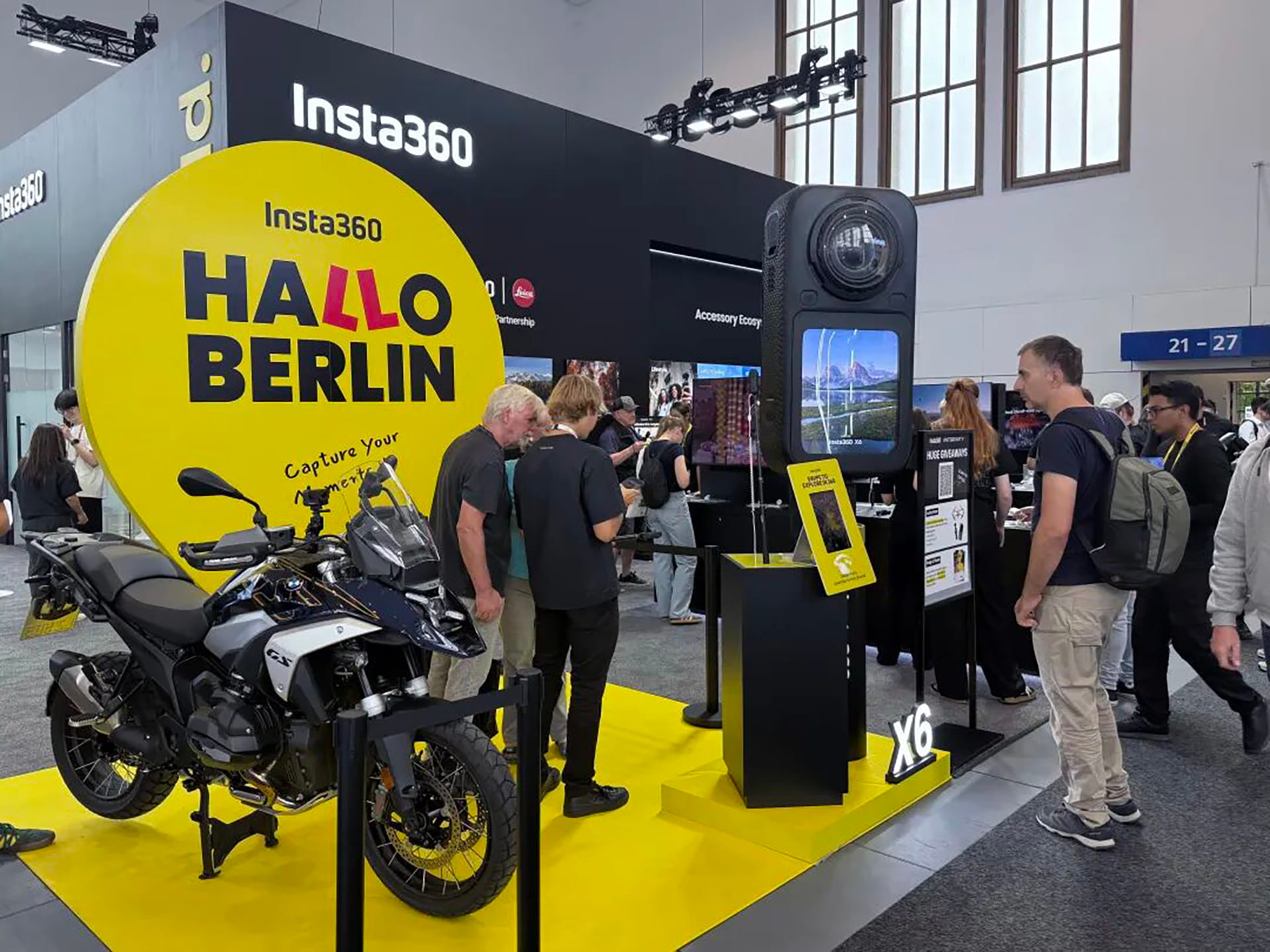
For startups such as Suisheng, however, IFA’s value is more immediate.
Their limited budgets rule out large booths in prime locations. IFA’s global reach nevertheless brings them visitors with a serious interest in doing business.
Wang told 36Kr that on September 4 alone, dozens of channel partners went directly to its booth.
They included local German agents as well as distributors from Southern Europe, Eastern Europe, the Middle East, the Philippines, and even Japan.
One Japanese agent spoke no English. The two sides sat together, translating their conversation on their phones one sentence at a time, and kept talking for a long while.
For startups, the chance to turn such focused conversations into business can matter more than booth size.
At 6 p.m. in Berlin, staff began clearing the halls as visitors filed out.
The lights dimmed one by one. Closing announcements repeated over the loudspeakers in German and English.
The colorful panel still stood prominently at the entrance, reading, “The future is now.”
In Europe, “the future” seems to mean something different.
The market may appear half a beat behind the AI race. IFA’s slower pace reflects a cautious approach to buying and adopting technology, one that can feel dull but also reassuring.
A few days earlier, Wang had visited MediaMarkt, described in the report as Berlin’s largest consumer electronics retailer.
In the vast store, he found “only one AI product, and it was Meta’s glasses.”
To Wang, the visit suggested that Europe’s AI hardware market remained at a very early stage.
“There’s relatively little competition here, but demand is strong,” Wang said. “The opportunity is only just beginning. No, actually, it hasn’t really begun yet.”
As IFA opened, a new model was released in ChatGPT.
While AI development continued at speed, companies in Berlin’s exhibition halls were focused on more immediate business.
They were closing one deal at a time.
KrASIA features translated and adapted content that was originally published by 36Kr. This article was written by Huang Nan for 36Kr.