
Punggol is a relatively new district in northeastern Singapore. It also carries an endearing Chinese name that, when spoken aloud, resembles the call of an animal.
The name “Punggol,” however, derives from Malay. It refers to the act of using a stick to knock fruit from trees.
For decades, the area was covered by dense forest. While office towers rose steadily in Singapore’s central business district, Punggol remained largely undeveloped. Locals once joked about “seeing lions in the jungle,” a reference to the district’s lack of urbanization.
Today, that image no longer holds. Punggol is home to a “digital district” positioned as a hub for technology and innovation.
In early April, WeRide and Grab launched public operations of an autonomous mobility service in the district. It marks the first deployment of an autonomous public transportation service in a residential neighborhood in Singapore.
When 36Kr visited Punggol late last year, WeRide’s robotaxi stood out against the muted tones of surrounding residential blocks. The seven-seater vehicle, finished in a purplish-red gradient, contrasted with the gray-and-white housing estates. During the pilot phase, residents could apply to test the service. Inside, the cabin was spacious, with sufficient room for passengers carrying luggage.
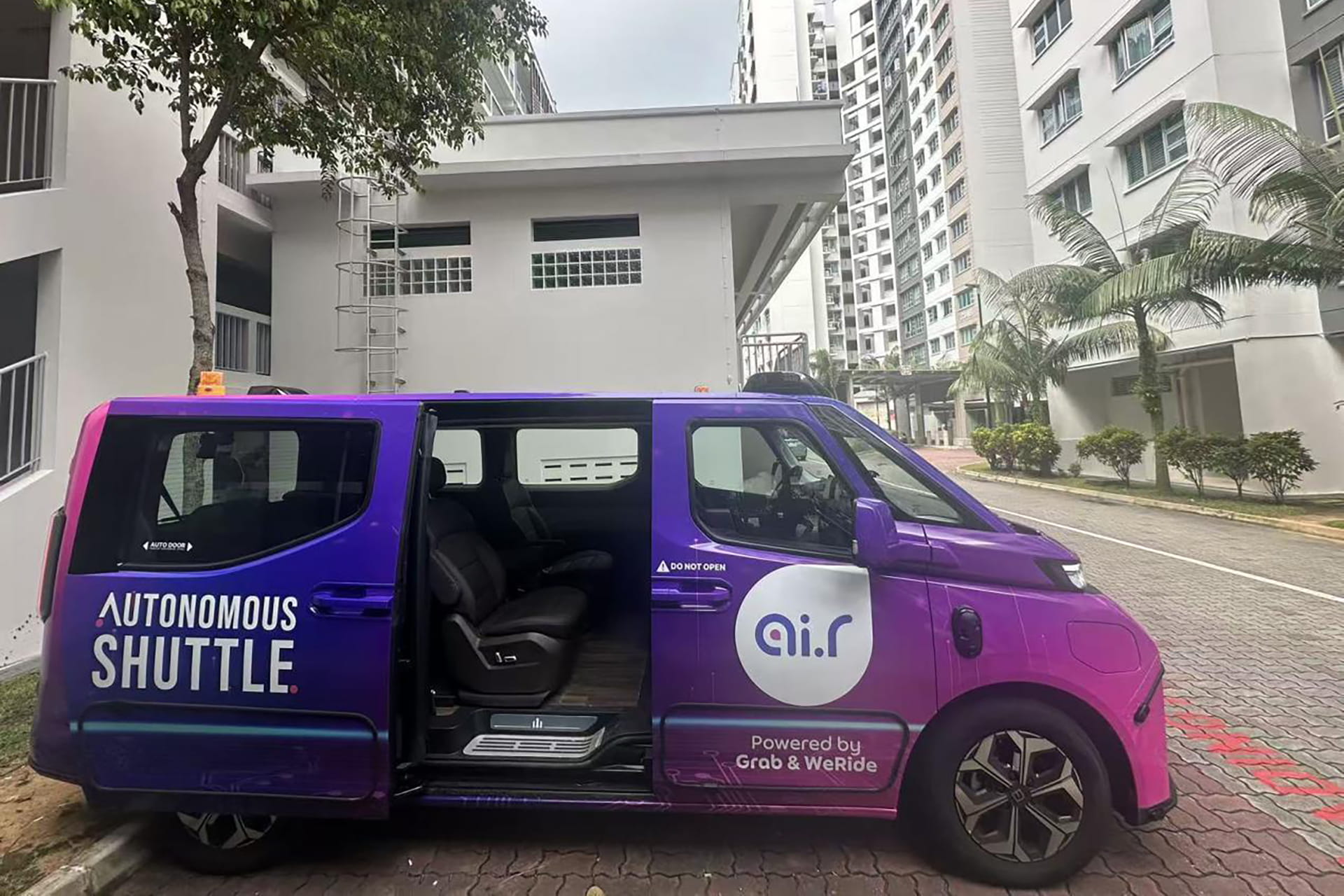
Punggol’s stage of development aligns with the requirements for deploying emerging technologies. As a newer district, it has a relatively young population that appears more receptive to innovation. During early trials, pedestrian traffic and road conditions were less complex than in the city center. At the same time, the district includes essential urban infrastructure such as public housing, train stations, and office buildings, offering a practical environment for real-world testing.
“The Singapore government wants to develop Punggol into an area both driven by and focused on artificial intelligence, and autonomous driving fits the narrative here very well,” a WeRide staff member told 36Kr.
Punggol can be seen as Singapore’s version of Silicon Valley. Since 2018, the government, together with JTC Corporation, has led its development. The first phase was completed in 2024, and the full project is expected to be finished this year.
The district aims to attract both local and multinational companies. Among its initial tenants are Delta Electronics, Boston Dynamics, Group-IB, and Wanxiang.
Universities play a central role in technology ecosystems. Adjacent to the district is the campus of the Singapore Institute of Technology. The area is designed with connected corridors to facilitate collaboration between academia and industry.
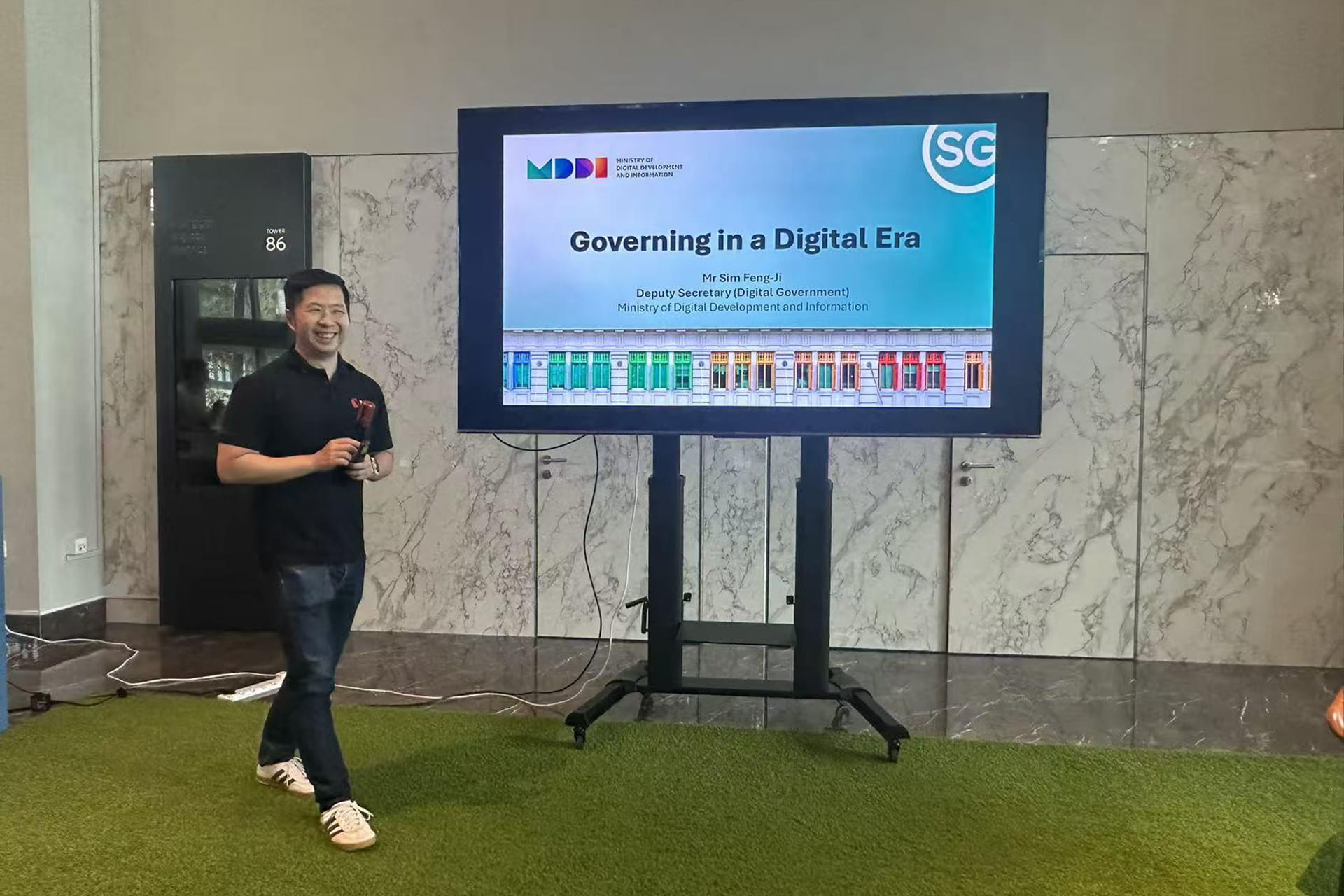
Sim Feng-Ji, deputy permanent secretary for digital government at Singapore’s Ministry of Digital Development and Information, outlined the government’s vision for Punggol to 36Kr. In official materials, it is described as “Singapore’s first smart town.”
The concept refers to infrastructure built on the Open Digital Platform, co-developed by JTC and GovTech. Through sensors and integrated systems, the platform enables data visualization, real-time monitoring, and energy management. The district also incorporates sustainability features, including rooftop solar panels, rainwater recycling for irrigation, and systems that convert food waste into fertilizer.
Singapore’s push into AI is broader than Punggol alone. On February 12, Prime Minister Lawrence Wong said in his budget statement that the country would launch a new initiative, “AI Missions,” targeting sectors such as connectivity, advanced manufacturing, finance, and healthcare.
To support this effort, the government plans to establish a council led by Wong. He emphasized that in a rapidly changing global environment, Singapore’s success will depend on how effectively it adopts emerging technologies, with AI at the center of that strategy.
Despite its small size, about six million people and a land area less than twice that of Beijing’s Chaoyang district, Singapore’s advantage lies in its ability to attract global talent.
Major technology companies, including Meta, OpenAI, and Google, maintain significant operations in the country. Several Chinese-founded AI startups have also expanded there, including Manus, which was acquired by Meta earlier this year.
Manus operates from a WeWork space near the Funan mall in central Singapore. The environment reflects the city’s international workforce. Mandarin is commonly heard, and amenities, from affordable food options to entertainment facilities, are readily accessible.
For many Chinese professionals, daily life in Singapore requires minimal adjustment beyond adapting to its tropical climate.
From the government’s perspective, livability and accessibility are critical to attracting global talent.
“You need to find a place in the world that Chinese, Americans, and Europeans are all willing to come to. There really aren’t many choices. Singapore is one of them,” Sim said.
For high-tech companies, the government also provides support in establishing and scaling operations.
“[We are] like the teacher of a class, taking care of the needs of every student in it,” Sim said with a smile.
KrASIA features translated and adapted content that was originally published by 36Kr. This article was written by Su Jianxun for 36Kr.