
Commercial rockets face two tests. A successful launch proves the technology works. Customer orders and repeat deliveries show whether it can sustain a business. For Orienspace, its latest Gravity-1 mission tested whether it could deliver for a major customer.
At 6 a.m. Beijing time on September 16, the Gravity-1 Y3 rocket, named Qianfan Quanshun, lifted off from the East China Sea. It placed eight network satellites for the Qianfan constellation and one EUHT wireless communications technology test satellite into their planned orbits.
It was Orienspace’s first mission to deploy a low Earth orbit satellite internet megaconstellation from a mobile launch platform at sea. The mixed payload, which combined a stacked satellite assembly with flat-panel satellites, made controlling successive satellite separations more complex.
Founded in 2020, Orienspace has now served the kind of large constellation it targeted from the outset. The mission gave it experience adapting its rocket and satellite interfaces for such deployments, strengthening its case for larger and more frequent contracts. As constellation operators begin buying launch capacity at scale, competition is expanding beyond R&D to reliability, delivery, and financial performance.
Scale and cost are the measures co-founder Peng Haomin returns to. Constellations need dependable capacity at an acceptable price. Rocket companies need enough orders to spread their investment across more launches. Simply describing the market as heavy on satellites and light on rockets misses the gap between planned demand and actual deliveries.
Orienspace initially expected large constellations to need substantial launch capacity in 2024 and 2025. Calculations based on satellite weight and the number deployed into each orbital plane pointed to a first rocket with a payload capacity in the four-metric-ton class. With limited development time, the team bypassed a small interim vehicle and designed the medium-lift Gravity-1.
Its published specifications describe a three-and-a-half-stage configuration with a solid-fuel core and four solid boosters. It can carry 6.5 metric tons to low Earth orbit or 4.2 metric tons to a 500-kilometer sun-synchronous orbit.
But a successful maiden flight did not immediately bring large constellation orders. Qianfan had launched 238 satellites by July this year, almost all on Long March rockets. Gravity-1 completed three successful flights before its Qianfan mission, giving customers a delivery record to assess.
Dedicated launches do not necessarily produce better margins than shared launches, or rideshares. A constellation operator can supply a large payload but also has bargaining power. Rideshare customers generally pay more per kilogram, although matching their orbital requirements and launch windows makes it harder to fill a rocket. Orienspace intends to maintain a base of dedicated constellation missions while developing its rideshare business.
That commercial calculation also shapes its next rocket and its approach to recovery. The liquid-fueled Gravity-2 is designed to carry 21.5 metric tons to low Earth orbit or 15 metric tons to a 500-kilometer sun-synchronous orbit, and is designed for more than 20 reuses. It is expected to be ready for a maiden flight in the fourth quarter of 2026. System-level testing is underway, with ground tests of the second-stage and first-stage propulsion systems planned next.
Peng sees the two rockets as complementary. Gravity-1 would handle rapid-response missions and medium-lift rideshares, while Gravity-2 would serve larger constellation deployments and, with further development, higher orbits.
Recovery alone does not establish the economics of reuse, she argues. Reserving return fuel reduces payload capacity, while inspection and refurbishment take time. She expects the economic benefits of reusable rockets in China’s commercial space industry to become clearer around 2029–2030. Until then, Orienspace aims to establish a reliable, high-capacity liquid rocket before improving recovery efficiency.
Developing both vehicles requires heavy investment. Peng says Orienspace raised nearly RMB 3 billion (USD 447.1 million) in two rounds in the first half of 2026, primarily to support Gravity-2’s recovery and reuse technology, infrastructure, and mass production. It is also preparing to convert into a joint-stock company.
Orienspace has also begun IPO preparations. It is in talks with securities firms and plans to complete that conversion and begin the formal pre-IPO guidance process by the end of 2026, followed by an IPO application in the first half of 2027. Gravity-1 is generating commercial revenue while Gravity-2 continues to require funding.
Peng’s targets again come back to scale and cost: an approximately 10% share of commercial launch capacity in 2027, rising to 20–30% in 2028, including capacity supplied by state-owned providers. She believes the next generation of large liquid rockets could match a Falcon 9 price benchmark of USD 3,000 per kilogram even without recovery.
Longer term, she wants Orienspace to become a space infrastructure company, exploring in-orbit maintenance, refueling, life extension, and debris removal once its launch business matures.
Peng says Orienspace must establish its launch business before expanding into other infrastructure services. As leading rocket companies go public, she expects the competitive field to stabilize. She said, “I have never seen entry into the capital markets as the end. It is a beginning. Without that entry ticket, though, many subsequent plans would be difficult to carry out.”
Peng discussed these plans, the company’s engineering choices, and the economics of launch services with IPO Zaozhidao.
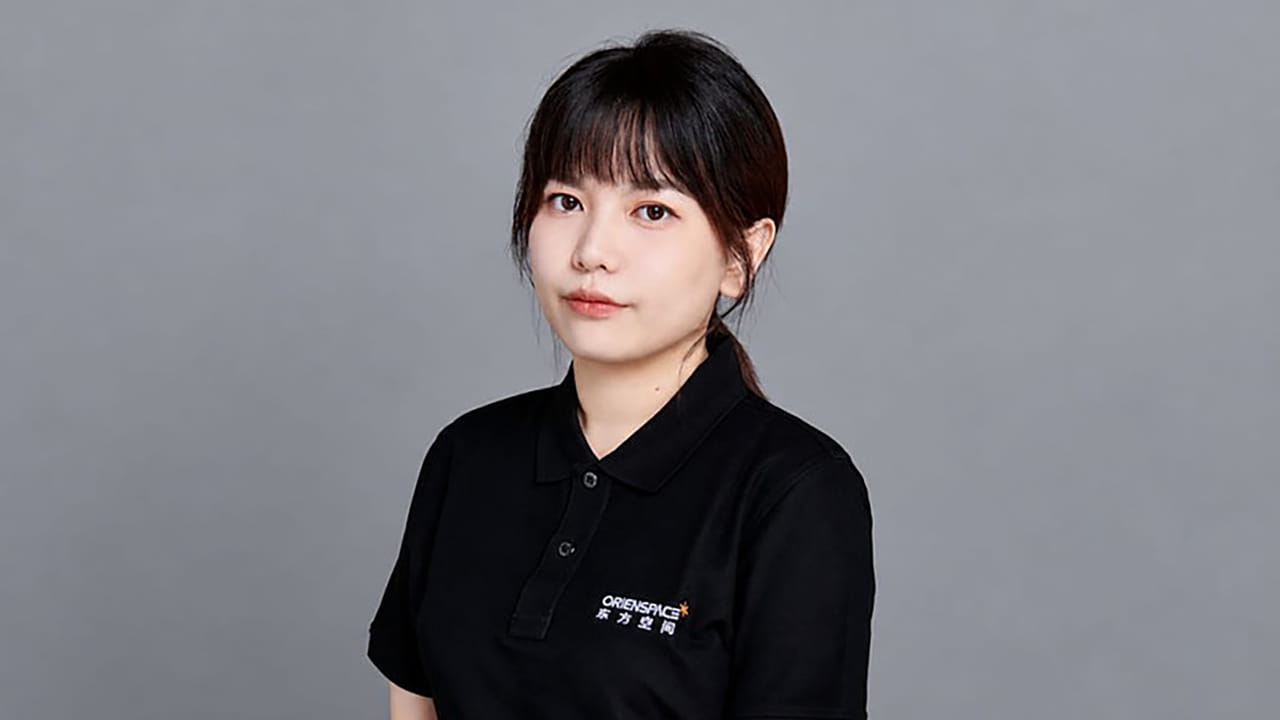
The following transcript has been edited and consolidated for brevity and clarity.
IPO Zaozhidao: Some competitors were founded after 2015 and had already launched their first rockets successfully. Was 2020 too late for Orienspace to start?
Peng Haomin (PH): We did not think so. Rockets sit in the middle of this industry. Rocket companies can grow only when their satellite customers develop. At the time, the organizations behind major constellation projects, including Qianfan and China Satellite Network Group, were still getting established. They needed to plan their networks, secure spectrum and orbital resources, assemble teams, and manufacture satellites. We expected concentrated demand for launch capacity around 2024 or 2025.
That affected our first product’s specifications. Developing a rocket within the state system usually takes five or six years. Even a private company needs three or four. Other companies’ first rockets did not have the payload capacity we considered necessary. We had about three years and could not spend them on an interim product.
Qianfan’s early requirements indicated satellites weighing about 250–300 kilograms, with around 18 deployed in one orbital plane. That meant more than four metric tons of capacity, already a medium-lift rocket. Instead of starting with a small vehicle carrying a few hundred kilograms or a little over one metric ton, we designed a four-metric-ton-class first product to meet large customers’ deployment schedules.
IPO Zaozhidao: Did entering later provide a clearer understanding of customer needs?
PH: It did when we were defining the product. We understood major customers’ actual needs better, and Gravity-1 was designed around them. We are beginning to see the benefits in 2026 and 2027.
But there was a cost. We missed several early fundraising booms, including around 2020. To my knowledge, Orienspace may still have raised the least funding among the six companies sometimes called commercial rocketry’s “six little dragons.” Entering later was not an advantage in every respect.
IPO Zaozhidao: What has differed most from your expectations when you founded Orienspace?
PH: We have broadly achieved our goals, but initially overestimated how readily large customers would accept a new rocket. We thought orders would follow quickly after a successful maiden flight. It was more complicated.
The industry is still developing and maturing. Not every rocket succeeds every time. When a rocket succeeds and then fails, customers develop an implicit requirement: two or three consecutive successes before they consider it reliable enough to use.
Things changed noticeably after our second consecutive success. Customers recognized that we offered reliability and value. We have received many orders in 2026 and expect more in 2027. We also began serving large satellite internet programs this year.
IPO Zaozhidao: Orienspace signed early cooperation agreements with Chang Guang Satellite Technology and Spacesail. What did those agreements mean, and why did it take so long to reach actual launches?
PH: Those agreements, signed around 2021, initially expressed strategic intent. Customers signed similar agreements with other companies. We were one of the later entrants, so securing one showed some confidence in our co-founders and their previous experience.
It was a long process. My understanding is that customers first selected several companies they thought could develop products within a few years and established relationships. When they needed launches, they checked which providers were ready. By 2024, several private companies’ products still did not fully meet their requirements, so customers initially chose Long March rockets.
IPO Zaozhidao: Was demand absent, or could the available private rockets not meet it?
PH: It was mainly a mismatch. Several commercial rocket companies had successfully flown their first vehicles, but those rockets did not fully fit large constellations’ need to deploy multiple satellites quickly. Each satellite weighed close to 300 kilograms. A launch carrying only a few would not provide the required deployment efficiency.
We designed Gravity-1 around that demand from the beginning, but still had to demonstrate its maturity. Demand existed; customers’ capacity requirements and the products they felt confident buying had not yet aligned.
IPO Zaozhidao: Why was there such a long gap between Gravity-1’s first and second launches?
PH: The product itself did not change much. We needed consecutive flights that customers would accept as proof. Two things caused delays: a change in a customer’s plans and repeated discussions with regulators to confirm a launch location. Together, they took almost a year. We ultimately found several commercial payloads at short notice and completed the second launch.
An earlier second flight would have helped our commercialization in 2026. Still, it was not too late. Customer acceptance improved substantially after consecutive successes.
IPO Zaozhidao: After several consecutive missions, is Gravity-1 now a mature product?
PH: In terms of payload capacity, I consider it the world’s leading solid-fuel rocket, with an advantage in value for money. Commercial maturity also depends on launch frequency and how much capacity we use.
Think of rockets as high-end logistics. Ground transport might cost tens of RMB per kilogram. Sending that kilogram into an orbit hundreds of kilometers above Earth is different. Long March rockets once charged private customers more than RMB 100,000 (USD 14,900) per kilogram for spare capacity. That has fallen to RMB 60,000–70,000 (USD 8,900–10,400) in recent years. Gravity-1 can offer RMB 40,000–50,000 (USD 5,960–7,450).
We are launching more often and carrying fuller loads. The first two test flights carried only a few hundred kilograms. Gravity-1 Y4, launched on July 22 this year, carried more than two metric tons. Y3’s Qianfan mission carried more than three. We are approaching the rocket’s payload limit. Higher frequency and fuller loads are both signs of commercial maturity.
IPO Zaozhidao: Why did Y4 fly before Y3?
PH: The numbers follow the order in which missions are submitted for approval, not necessarily the order in which they fly. We must file six months in advance. We originally planned the Qianfan mission first, followed by a mission mainly serving the Huantian constellation. Qianfan’s satellite schedule changed, so the latter mission flew first.
A rocket is generally paired with its payload when the mission is filed, and its number cannot be changed arbitrarily. Other rocket models have also flown out of numerical order.
IPO Zaozhidao: What remains before Gravity-2 is ready for its maiden flight?
PH: We completed its first full design iteration in the second half of 2024. Most hardware has now been manufactured and delivered, and the team is conducting system-level tests. The main remaining steps are two large ground tests, one for the second-stage propulsion system and one for the first-stage system. Both are expected soon.
IPO Zaozhidao: Which Gravity-1 technologies can transfer to Gravity-2, and which capabilities need to be built?
PH: The biggest difference comes down to one system. Solid propellant is cast inside the motor, so it does not need a separate fuel-management system. Liquid propellant is held in tanks and must reach the engine inlet at a specified pressure and flow rate. That requires a pressurization and feed system.
Many other capabilities transfer, including overall design, structures, and flight control. Liquid rockets also demand stronger fluid-simulation skills. We recruited specifically for these needs in 2024, strengthening the pressurization and feed team and bringing in fluid-simulation specialists.
IPO Zaozhidao: Gravity-1 uses purchased motors. Will Gravity-2 immediately use your own engines, and what difference would that make?
PH: We plan two stages. The first one or two flights will use mature commercial engines, followed by a switch to our own.
The engine count alone does not tell you enough. You need to know the thrust of each engine and the combined thrust at ignition. With purchased engines, there would be nine producing about 80 metric tons of thrust each, or about 720 metric tons in total. With the Yuanli-110, nine engines producing 110 metric tons each would provide 990 metric tons. That is the key difference between the configurations.
IPO Zaozhidao: Why choose liquid oxygen and kerosene instead of liquid oxygen and methane?
PH: The liquid oxygen-kerosene approach is relatively mature in China, with manufacturing experience we can draw on. That fits our position as a company catching up. We want to develop a usable product with good economics quickly, rather than spend too much time debating technical sophistication.
IPO Zaozhidao: Does that also explain why Orienspace did not start directly with a recoverable rocket?
PH: Yes. In my view, China’s recoverable rockets have yet to demonstrate their full economic value. We should first make a reliable, high-capacity liquid rocket, then improve recovery efficiency.
IPO Zaozhidao: Recovery is widely seen as the key to reducing costs. Do you agree?
PH: There is a tradeoff. Recovering valuable engines and the first stage requires reserving fuel for the return, which reduces payload capacity. We therefore closely track the ratio between payload capacity with recovery and without it. To my knowledge, Falcon 9 achieves about 70%. China’s current level is still far below that.
If the ratio does not exceed roughly 55–60%, recovery could cost more per unit of payload than an expendable launch. Its economic value would then be limited. We need to ask what kind of recovery is worthwhile.
IPO Zaozhidao: When do you expect recovery in China to become economical?
PH: My personal forecast is around 2029 or 2030. For a substantial period before that, high capacity and low costs will still be needed to close the launch-capacity gap for satellite internet networks.
Turnaround time is another issue. If a recovered rocket takes six months or a year to fly again, it has not clearly solved either the cost or launch efficiency problem. Conversely, even if recovery initially costs somewhat more, a quick return to flight without building new engines could still be valuable. We have yet to see those efficiency gains fully materialize.
IPO Zaozhidao: When you say Chinese rockets could match Falcon 9’s price, are you comparing reuse counts or the quoted price per kilogram?
PH: The quoted price, not SpaceX’s internal costs or simply how many times a rocket has flown. Public information on Falcon 9 puts its price at about USD 3,000 per kilogram, equivalent to more than RMB 20,000 (USD 2,980).
Our calculations suggest that China’s coming generation of large liquid rockets could reach that price even without recovery. I mean liquid rockets with payload capacities above five metric tons. Some private and commercial rockets already offer around RMB 40,000 (USD 5,960) per kilogram, but they are mainly medium-lift vehicles. The next generation of large launchers is more likely to reach USD 3,000.
IPO Zaozhidao: What would it take to reach the USD 1,000 per kilogram associated with Starship, or even the USD 100 discussed in the market? How do customers rank advanced technology, reliability, and price?
PH: My estimate for Starship at its current stage is about USD 1,000 per kilogram without reuse. There are no usable data yet to establish how much lower reuse would take it.
For both liquid and solid rockets, reliability comes first. Major customers will not use a rocket that has not proved reliable. After that, its price must fall within an acceptable range.
IPO Zaozhidao: Which recovery approaches are you developing for Gravity-2?
PH: We are pursuing both a net-based system and a support frame system. Both are in the design and simulation stage.
IPO Zaozhidao: Given demonstrations of both approaches, is recovery no longer a major technical obstacle?
PH: Recovery at sea is more difficult because the platform moves with the vessel. On land, you have to make the rocket stable. At sea, you must also account for the ship’s movement, which adds constraints.
IPO Zaozhidao: Gravity-1 has begun establishing a viable commercial model. What does that mean?
PH: In principle, Gravity-1 can be profitable, but it depends on each flight’s orders. As in freight transport, the fuller the load, the greater the chance of making a profit.
That does not mean every launch already makes money. We serve two main customer groups: large constellations deploying multiple satellites and commercial customers sharing a launch. Their pricing and coordination requirements are very different.
IPO Zaozhidao: Does that make large constellation operators your main customers?
PH: Our strategy is to become an early provider to large constellations and guarantee a certain volume of service each year, while also developing rideshare operations. As in freight, a customer can charter the whole vehicle or share it. The price per unit is usually higher for rideshares. Y4 used that model.
IPO Zaozhidao: Does the higher rideshare price make it more likely to turn a profit?
PH: In theory, yes, but in practice we cannot always fill the rocket. Gravity-1 has substantial capacity. Customers can share a flight only if their launch windows and orbital requirements are close enough.
Some midsize customers are growing. Arranging rideshares is easier in 2026 than it was in 2025, and I expect it to get easier again in 2027. But each flight’s profitability still depends on its orders and payload utilization.
IPO Zaozhidao: What is driving those customers’ demand?
PH: Applications are starting to develop. For example, in 2026 the Ministry of Industry and Information Technology approved China’s first batch of commercial trial permits for satellite internet of things services. That opens more industry-specific applications beyond broadband satellite internet.
Examples include monitoring oil and gas pipelines, inspecting power grids, and operating unattended mines. Areas with poor terrestrial communications, such as remote oilfields, could use satellite communications.
Once those applications find a market, they create continuing demand for launches: first to build constellations, then to replenish satellites as they reach the end of their lives. That demand can sustain private rocket companies.
IPO Zaozhidao: Does your calculation for a flight breaking even include launch facilities and depreciation?
PH: We do not own the facilities we currently use. We rent a launch vessel funded by the government, paying per launch or per day. Those costs are clear, and my calculation includes them.
We must still distinguish a single launch from the whole company. Individual flights could generate net profit in 2027, but the company may not, because Gravity-2 will enter an intensive flight test phase and overall R&D spending will remain high.
IPO Zaozhidao: What are your targets for companywide profitability and market share?
PH: We hope to become profitable as a company in 2028. I care more about how much payload we actually deliver and how much revenue we generate. Our goal for 2026 is to rank among the top three private providers. Based on signed contracts we can execute this year, we are confident of reaching that position.
We then aim for approximately 10% market share in 2027 and 20–30% in 2028. That includes commercial launch capacity supplied by state-owned providers, not just private companies.
IPO Zaozhidao: Will Gravity-1 retire once Gravity-2 is operating reliably? How would the two differ if they remain in service together?
PH: The transition could be long. Large liquid rockets will need continuing improvements, including lighter structures and better engine performance, to achieve their intended capacity.
Gravity-1 also has a distinct role: fast, mobile launches for rideshare customers with scheduling requirements. Eventually, we could offer departures every quarter, every month, or more often, launching once payload utilization reaches an acceptable level.
Gravity-2 is a large launcher. Combining payloads weighing a few hundred kilograms each could require dozens of satellites, making coordination inefficient. It is better suited to large customers’ constellation deployments. With further improvements, we also hope it can serve higher-orbit missions, including geosynchronous orbit.
Smaller Long March vehicles, such as the Long March 2C and 2D, coexist with larger models such as the Long March 6A, 8A, and 12. A large rocket may have a lower unit cost but cannot necessarily offer the timing and frequency a smaller constellation needs. A smaller vehicle may cost more per unit but depart sooner. Gravity-1 and Gravity-2 can likewise coexist because they serve different requirements.
IPO Zaozhidao: Why does Gravity-1 have such a short, compact shape?
PH: It was designed for sea launches. Four boosters lower the overall center of gravity, making the rocket more stable as the ship moves. They also raise its capacity into the medium-lift class. The core alone would carry less than two metric tons. Its shape reflects its operating environment.
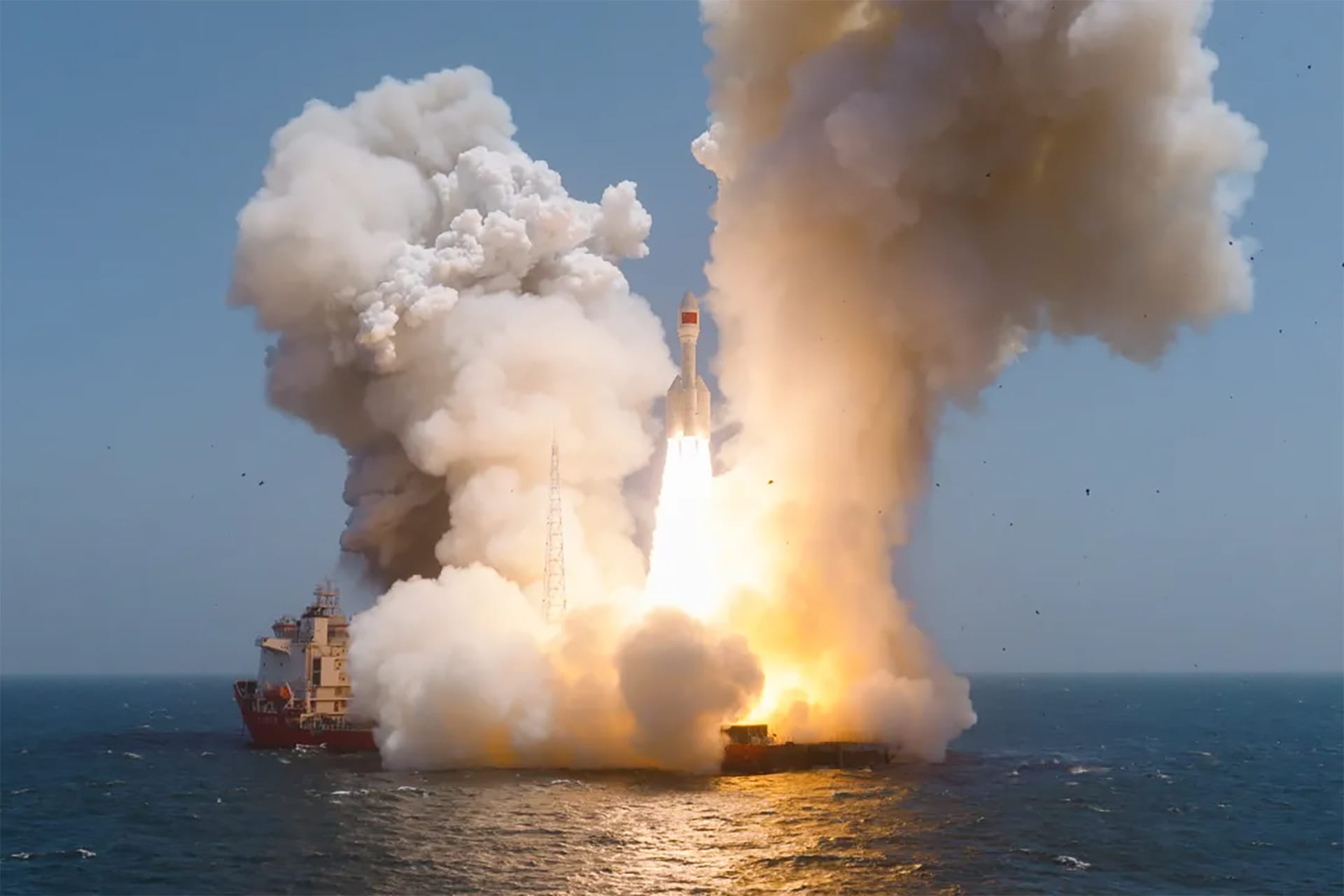
IPO Zaozhidao: Most launch providers use fixed pads. Why emphasize mobile launches at sea?
PH: When organizing rideshares, you discover the constraints of fixed pads. Different orbits require different launch directions and drop zones. Once you avoid populated areas and potential international disputes, the options are more limited than they appear.
Wenchang is well situated because many possible drop zones lie at sea. But rapid growth in launch demand will put pressure on pad availability.
IPO Zaozhidao: Will the waters near Haiyang and the East China Sea near Shanghai become your two regular launch bases?
PH: “Mobile launch locations” is more accurate. Once we have launched from a location, the approval process is easier the next time. China’s previous sea launches mainly took place near Yantai and Rizhao, or off Yangjiang. Our previous East China Sea launch was the first by a private rocket in those waters.
The locations near Yantai and in the East China Sea suit different orbital directions and together cover about 70–80% of our current launch requirements. We will continue adding locations.
IPO Zaozhidao: Will Gravity-2 also launch from a mobile platform at sea?
PH: If conditions allow, we hope to build our own mobile launch platform for liquid rockets.
IPO Zaozhidao: Will Gravity-2’s development and maiden flight schedule determine your IPO timetable?
PH: There is a connection, but I do not think it is necessarily strong. Our strategy is not simply to debate which technology is most advanced. We first look at the economics: payload delivered, revenue, and market share. We are pursuing several recovery technologies ourselves, but focus on their commercial value.
Capital market assessments also depend on how people understand a company’s value. Early discussions may emphasize technology and recovery in connection with the STAR Market’s fifth listing standard. But financial assessments should not simply mirror technical ones. Whether recovery reduces costs must be evaluated under Chinese conditions.
There are clear tradeoffs. If recovery does not yet reduce unit costs but high-capacity, low-cost rockets meet real demand, that commercial value should also be recognized.
IPO Zaozhidao: Have you entered pre-IPO guidance? Will you use the STAR Market’s fifth listing standard?
PH: We are in intensive discussions with securities firms and are converting into a joint-stock company. We plan to complete the conversion and enter guidance as soon as possible.
We will not necessarily use the fifth standard. We are also considering other routes based on operating revenue and other measures, assessing which best fits our stage of development.
IPO Zaozhidao: How will you use the capital raised at this stage?
PH: Our two funding rounds in the first half of 2026 raised nearly RMB 3 billion in total. The money will primarily support Gravity-2, particularly continuing R&D on recovery and reuse, as well as infrastructure and mass production.
IPO Zaozhidao: Beyond launch capacity and financial performance, what advantages does Orienspace have?
PH: Those are already important advantages for a commercial company. Talent is another barrier to entry. Most companies no longer focus only on their founding team by the time they reach the Series B or Series C stage, but commercial space still has a limited talent pool.
Our team combines senior aerospace experts, experienced professionals from the established aerospace system, and a continuing intake of designers born in the 1990s and 2000s. That gives us depth across generations.
IPO Zaozhidao: Will marketing and sales become more influential as your products mature?
PH: Certainly. Before a product exists, the priority is helping the technical team build it. Afterward, we need to win customers, and market feedback must guide improvements.
Gravity-2 is a clear example. Development does not stop when it is built. If customers’ satellites become heavier or larger, the fairing must change accordingly. The marketing team has to track those needs and pass requirements to the designers.
Initially, everyone was proving they could build rockets. Now we are competing on revenue, profit and loss, and R&D investment. Market requirements will play an increasingly important role.
IPO Zaozhidao: Do you agree that the industry is overly heavy on satellites and light on rockets? Are rockets the real bottleneck?
PH: Launch capacity is insufficient, but that description is not entirely accurate. Satellite manufacturing capacity exists. Without enough rockets, however, customers will not build large numbers of satellites just to leave them sitting around.
Rockets face both manufacturing constraints and shortages of infrastructure such as launch pads. This is not solely a rocket technology problem.
IPO Zaozhidao: Could constellation operators’ commercialization affect rocket companies’ growth?
PH: Upstream and downstream businesses need to reinforce one another. Constellations do not have to wait for abundant launch capacity before they start. A little more capacity accelerates deployment; faster deployment and the revenue it generates can then support more launches.
One practical problem is that satellite internet customers do not yet generate revenue at scale. They need several hundred satellites in orbit to achieve sufficient geographic and temporal coverage. Before that threshold, substantial revenue is difficult. As deployment accelerates, I expect this to change in 2027 and 2028.
IPO Zaozhidao: Does that mean rocket companies remain constrained by constellation deployment schedules?
PH: Not entirely. I see the industry ultimately as space infrastructure. In China, infrastructure development needs overarching goals, with construction and funding arranged in cycles. Starlink follows a different path, building while raising capital. The systems have different characteristics, so we should not compare just one part of them.
IPO Zaozhidao: How would you like people to define Orienspace?
PH: I want it to be a space infrastructure company. Some potential applications are not yet mature, but we have begun preliminary research into in-orbit maintenance, management, and “road clearing.”
Think of cars and roads. Cars came first, followed by large-scale road building and traffic management. In space, there are not yet enough “cars” for traffic control to be the problem it will eventually become. As numbers grow, some issues will have to be addressed.
IPO Zaozhidao: What specific businesses could you expand into?
PH: One is extending spacecraft life in orbit. A satellite sometimes reaches the end of its life because it has run out of fuel, not because its components no longer work. Fuel may be the least valuable part of the satellite. Refueling it so it can operate for several more years could make economic sense.
Another is clearing the growing amount of debris in low Earth orbit. Space will need cleaners. It is an international environment, and I can imagine a system similar to a carbon tax: users pay into a fund under the “polluter pays” principle, and the money finances cleanup.
IPO Zaozhidao: Would that expansion include satellite manufacturing and operations?
PH: Operations require licenses, and their scope means we cannot directly enter the same operating businesses. Expansion also depends heavily on access to capital. We need sufficient funding before proceeding.
IPO Zaozhidao: So going public would be the beginning of the next phase?
PH: Yes. I have never seen entry into the capital markets as the end. It is a beginning. Without that entry ticket, though, many subsequent plans would be difficult to carry out.
This article was adapted based on a feature originally written by SY and published on IPO Zaozhidao. KrASIA is authorized to translate, adapt, and publish its contents.
Note: RMB figures are converted to USD at rates of RMB 6.71 = USD 1 based on estimates as of September 22, 2026, unless otherwise stated. USD conversions are approximate and, where appropriate, rounded for ease of reference. They may not fully match prevailing exchange rates.