
Travis Beals spent two years trying to dismiss an idea that his Google colleague came up with: putting data centers in space, powered by the sun.
“It turned out, we couldn’t,” said Beals, senior director of Paradigms of Intelligence, a research team at Google that works on frontier artificial intelligence and other cutting-edge technologies.
The idea had more promise than he initially thought, and after doing numerous calculations and running ground testing, Beals and his team decided they needed to test it in space. Thus was born Project Suncatcher, a moonshot experiment by Google in partnership with earth imagining company Planet Labs, with the end goal of carrying out AI computing in Earth’s orbit.
The first satellite equipped with Tensor Processing Units, a specialized AI processor developed by Google, will be launched in 2027 to test whether the chips can survive the space environment and run computations effectively.
Google is not alone in trying to build massive data centers capable of training and deploying AI in space.
Big tech players, startups, and government agencies in both the US and Asia are looking to the heavens as the AI boom collides with constraints on power grids and growing community opposition to hosting massive facilities in their backyards.
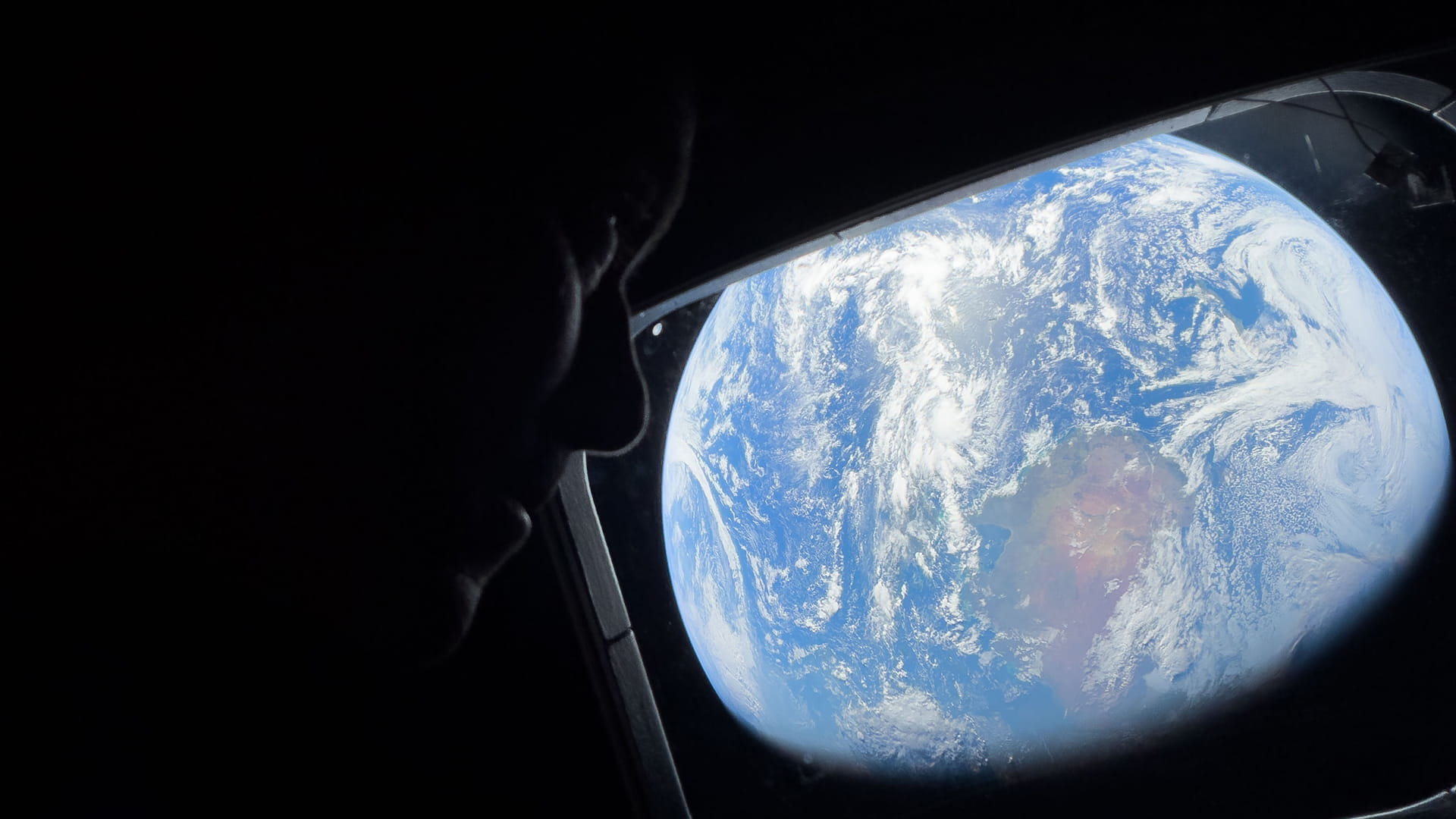
“The sun is, of course, the biggest power source in our solar system,” Beals said.
But access to unlimited energy supply is not the only motivation for wanting to put data centers in space.
“This is essentially the latest front of the great competition between the US and China, where multiple industries from aerospace, artificial intelligence to semiconductors all converge,” said Hong Shangguan, a veteran venture investor and former partner at Lenovo-backed Legend Capital.
“The technologies are still in the early stage and require enormous capital and time, but China must secure its strategic position now.”
That sentiment is echoed across the Pacific.
“As our infrastructure becomes more valuable in space, space becomes now not a place where we have strategic advantage, it’s a strategic necessity now to protect our capabilities,” John E Shaw, former deputy commander of the US Space Command and now an investor in the space sector, told attendees at the 2026 Milken Global Conference in Los Angeles.
While both the US and China see putting AI computing in space as a strategic must, the two countries are taking different approaches, and their motivations also differ.
In the US, the AI infrastructure buildout is significantly constrained by energy issues, to the point that tech leaders including Nvidia’s Jensen Huang have called it the biggest bottleneck for the US to lead the AI race.
US data centers have a total capacity of 29.2 gigawatts, which accounts for 6% of the country’s electricity grid, according to the latest report by the International Data Center Authority, a Washington-based think tank.
Data center pressure on the grid has drawn criticism from communities across the country.
“We’re already seeing political backlash in the US, prospectively in the European Union, and then in Asia, there might be some concern about overusing energy for data centers,” said Jacob Flores, head of research at Type One Ventures, which invests in emerging technologies.
“Those are the types of factors that entrepreneurs pursuing space are arguing: ‘Hey, there’s going to be less political backlash if we start doing some of this infrastructure buildout off world.'”
In China, energy is not such an imminent constraint.
The International Data Center Authority said the country’s data centers have a capacity of 8.5 GW, which only accounts for 0.8% of its national grid.
“China has not even used 1% of its energy capacity. It has built more renewable energy than the entire US has done,” said Mehdi Paryavi, the think tank’s CEO.
“In the US, the focus is on bringing data up to space for computing, because they need to solve the energy problem,” said Hong, the investor. “In China, energy on the ground is not the issue. Our focus is more on computing space-generated data in space because the data produced in orbit, from satellites and future space manufacturing, is very hard to transmit back down to earth.”
China has accelerated efforts in the state-led charge to build data centers in space.
In April, China’s Ministry of Industry and Information Technology established the Space Compute Professional Committee to coordinate standards and set up incentives to award related R&D projects up to RMB 10 million (USD 1.5 million) per project.
In 2025, Chinese startup ADA Space and Zhejiang Lab, which is backed by Alibaba Group and others, launched 12 satellites equipped with computing devices, which ADA Space claims is the world’s first dedicated orbital AI computing constellation.
Meanwhile, StarCloud, a startup backed by Nvidia, sent an H100 graphics processing unit into orbit in November and said it trained the first large language model (LLM) in space.
But it’s one thing to launch a few demonstration satellites equipped with AI chips and another to call them data centers in space.
Ali Javaheri, a senior analyst at PitchBook, said that “large-scale orbital data centers that are meant to replace terrestrial ones” come across almost like a marketing ploy by some of these startups. “You can have a Mac Mini on your desktop to run LLMs and call it a data center, but it’s not a real data center,” he added.
There are many technological difficulties to overcome to make large-scale space data centers a reality, including space radiation, cooling and debris. But some industry participants say the main challenge is not technological but economic, and more specifically, the launch cost.
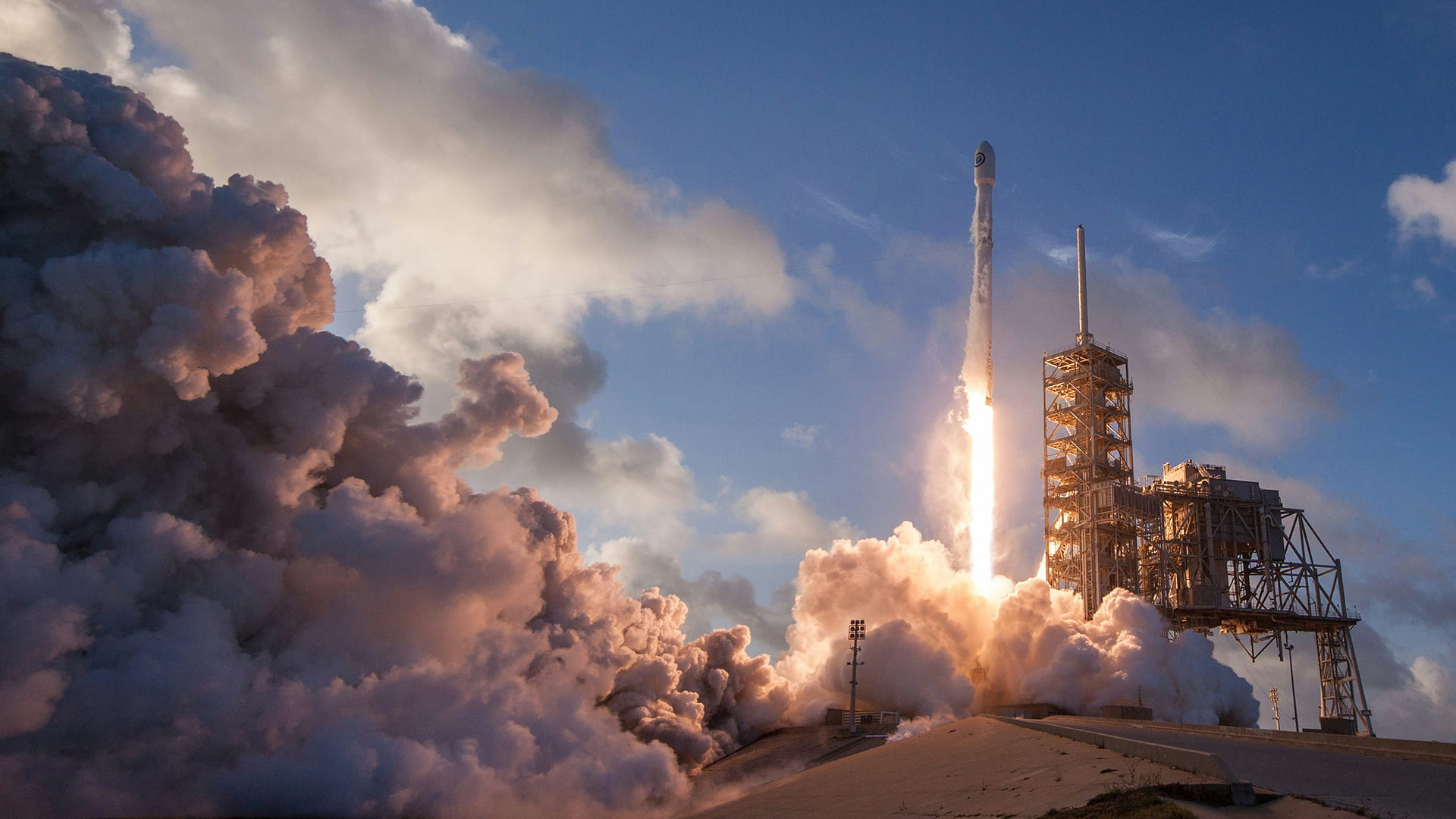
According to a report by Citi, the launch cost of one kilogram cargo dropped to USD 1,500 in 2022, a decrease of about 30 times from 1981. In some scenarios, the launch cost could drop to as low as USD 33 per kilogram in 2040.
“Space has gotten a lot cheaper than it used to be in the past. That’s actually one of the trends that we see that will enable this [space data center] over time,” Beals said. However, “it’s still more expensive than it would need to be today to make large-scale space data centers viable or economically viable.”
SpaceX, the dominant launch player with heavy-lift capability, has contributed to the decreasing launch cost, but it has also become one of the biggest bottlenecks.
“SpaceX will prioritize their own compute,” said Flores at Type One Ventures, noting that since acquiring xAI, Musk’s empire now spans rockets, AI models, and chip fabrication. “It’s going to be a tricky market for those that don’t have their own launch [capabilities] to get that infrastructure up there.”
Other launch companies are trying to turn the bottleneck into their advantage.
The share price of Rocket Lab, a key US satellite and rocket builder, surged on May 8 after it reported record earnings and more than USD 2 billion worth of launch backlogs.
“I think [space data centers] will always be in competition with terrestrial-based data centers, and then ultimately it comes down to the price of launch,” Brian Rogers, vice president of global launch services at Rocket Lab, told Nikkei Asia. “So that launch price needs to continue to become more aggressive in order to enable space-based data centers to really compete with the terrestrial kind.”
Rogers said Rocket Lab’s strength compared to Space X lies in a service model that is more flexible, spanning component supply to supporting customers in building customized modules and satellites, as well as providing end-to-end launch services.
Meanwhile, everyone’s math is a bit different on the target launch cost.
Rob DeMillo, chief executive of Sofia Space, a startup that has built a modular tile system to address the orbital cooling problem without heavy heat pumps, said his company’s business models for the 2030s are built on a target of USD 1,000 per kilogram.
“At USD 1,000 a kilogram, it makes everything make sense,” he said.
For Robbie Schingler, co-founder of Planet Labs, which has launched nearly 700 satellites over 15 years and is Google’s hardware partner on Suncatcher, the target is more demanding.
“The magic point is around USD 300 a kilogram for when it makes sense economically to be on par with terrestrial data centers,” he said. “I think we’re literally 10 years away.”
Despite that long horizon, the tech supply chain is already gearing up for space-based data centers to become a reality.
Tapping space would open up a new window for server suppliers like Foxconn, Quanta and Wistron, all leading suppliers to Nvidia and cloud service providers.
“In the past, space hardware had to be all space-grade approved and the supply chain is a rather closed ecosystem, but with the demand for GPU servers to go to space, it inspires new technologies, ideas and creates chances for newcomers to elevate commercial-grade components and systems to space use,” said Chiu Shih-fang, a veteran tech supply chain analyst with the Taiwan Institute of Economic Research.
Phison Electronics, a key memory solutions supplier that has spent the past decade developing space-grade storage, told Nikkei Asia that space holds significant potential.
“Putting data centers and storage infrastructure into space is a very compelling vision,” said Phison Electronics founder and CEO P S Pua, whose company has invested in space-grade storage solutions for a decade. “The most important technical challenge is ensuring that systems in outer space do not crash, and that, if they do crash, they can restore themselves. Otherwise, no one can simply go to space to fix them.”
Chen Yang-Chieh, vice president at Asia Vital Components, a key supplier of thermal dissipation solutions for Nvidia and global data centers, said full commercialization of space-grade thermal solutions is still some time off, if it ever occurs.
“It is unlikely to happen or materialize in the near term, and it will still take several years for such infrastructure to begin. Even then, no one can guarantee it will become a major business. That said, I would say some early engagements are already starting,” the executive said. “These thermal solutions are entirely different from those on the ground, the design and size all need to be significantly different.”
Ramon.Space, a space-based computing solutions provider that has worked on satellite missions for the Japan Aerospace Exploration Agency’s (JAXA) Hayabusa 2 as well as NASA (National Aeronautics and Space Administration), is partnering with Nvidia AI server maker Ingrasys to build and launch in-orbit data center infrastructure in the next two to three years. Ingrasys is a server subsidiary of Taiwan’s Foxconn.
Avi Shabtai, CEO of Ramon.Space, told Nikkei Asia that space-based data centers would likely have a “totally active and different supply chain” than the traditional space sector, because the payloads will be much different. “There is a full ecosystem and a full supply chain that will change, and there will be newcomers coming in.”
National security concerns and conflicts on the ground may provide a further tailwind for the push to put data centers in space. Japan and Singapore are among the countries investing in sovereign AI, while three Amazon Web Services data centers in the Middle East have been out of commission due to the Iran war.
Steve Eisele, CEO of Lonestar Data Holdings, a US space data storage provider aiming to put data centers on the moon, told Nikkei Asia that building data infrastructure in space makes sense, particularly as initial demand is likely to come from a resilience perspective and the need to safeguard critical infrastructure such as utilities, banking, telecommunications, and healthcare.
“If something were to happen to your data, knowing that you have a copy in space that no one can access is important for the continuity of your country and industry,” Eisele said.
He added that there are many risks that could damage data, including cyberattacks, human error, and natural disasters such as earthquakes. “It is essential to have backups of critical data somewhere, and outer space is a very viable option.”
As the race for space-based data centers heats up, will the geopolitical fault lines on Earth be reflected in orbit? US cloud providers are barred from operating freely in China, while Chinese data centers are cut off from accessing US companies’ most advanced chips.
“I don’t know why it would play out any differently than terrestrial, but of course, even just the terrestrial landscape is complicated and shifting right now, ” Beals said.
Schingler at Planet Labs pointed to a history in which collaboration was still possible despite heated competition: At the height of the Cold War, the Apollo and Soyuz capsules docked in space.
“There are some challenges that we face as a human species in how the modern world works and operates,” Schingler said.
“Space can be one avenue for collaboration,” he said. “Science is another.”
This article first appeared on Nikkei Asia. It has been republished here as part of 36Kr’s ongoing partnership with Nikkei.
Note: RMB figures are converted to USD at rates of RMB 6.81 = USD 1 based on estimates as of May 13, 2026, unless otherwise stated. USD conversions are presented for ease of reference and may not fully match prevailing exchange rates.