

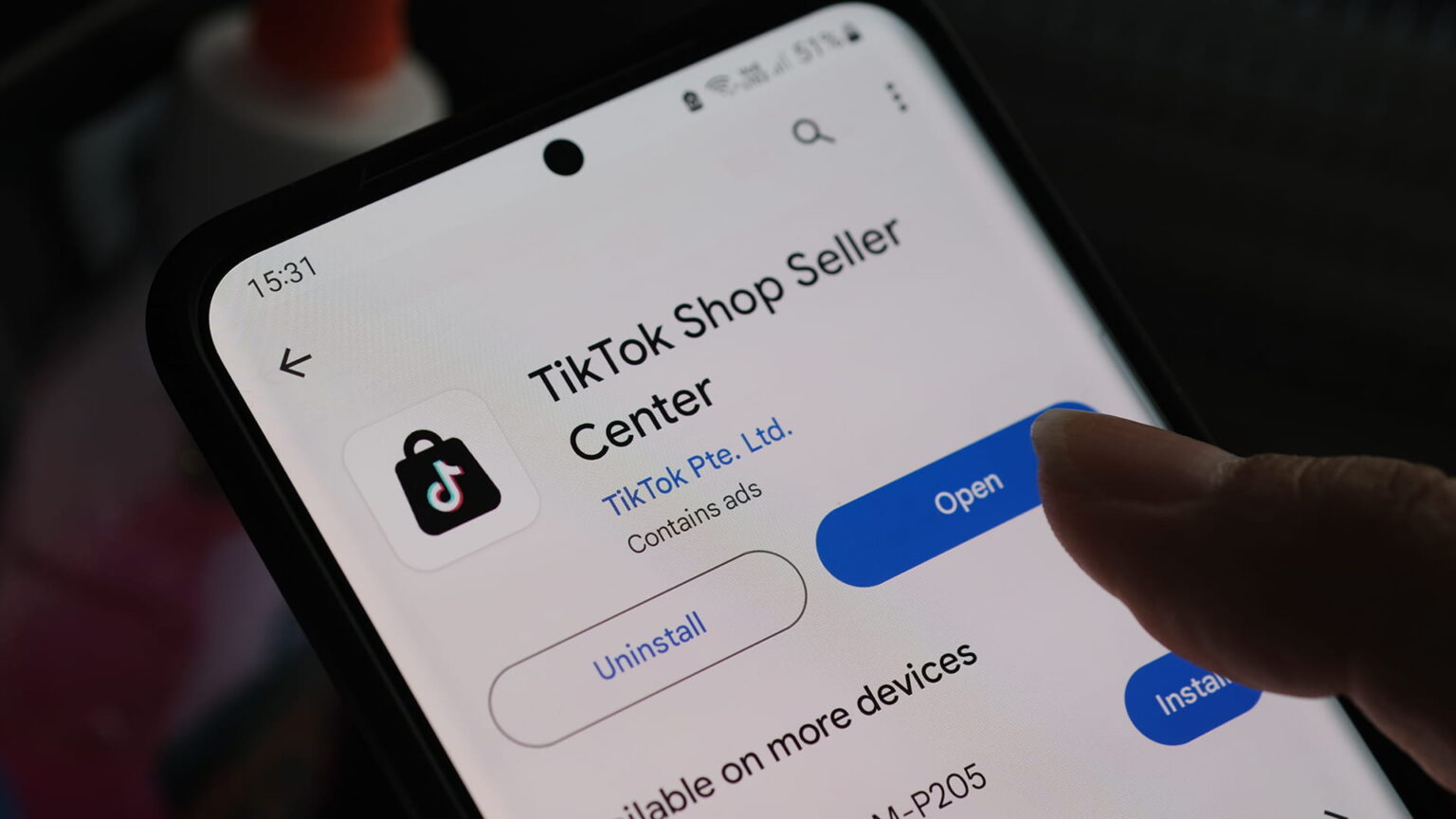
Just over a year ago, conversations about Southeast Asia’s e-commerce sector centered on a duopoly: Shopee at the top, Lazada behind it, and TikTok Shop emerging as a fast-growing but smaller challenger.
That hierarchy is now under pressure.
According to research firm Momentum Works, TikTok Shop is closing the gap with Shopee in parcel volume across Southeast Asia. While Shopee remains the region’s largest platform by gross merchandise value, or GMV, the narrowing difference in transaction volume is beginning to influence both corporate strategy and investor expectations.
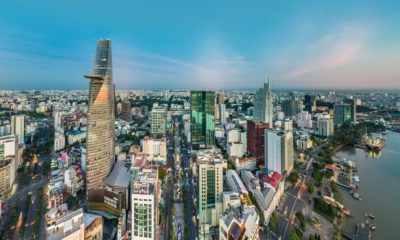
Although Indonesia was widely seen as TikTok Shop’s primary Southeast Asian market after it acquired a majority stake in Tokopedia and merged the businesses, by the end of 2025 the shift is most evident in Vietnam.
Vietnam becomes the epicenter of competition
Vietnam offers one of the clearest case studies of how Southeast Asia’s competitive balance is evolving.
According to a 2025 online retail report by e-commerce data platform Metric, GMV across Vietnam’s four largest platforms—Shopee, Lazada, Tiki, and TikTok Shop—reached VND 429.7 trillion (USD 16.4 billion) in 2025.
Metric said Shopee maintained its lead with more than 56% market share, while TikTok Shop expanded to over 41%. Lazada and Tiki’s combined share fell to around 3%, down from 6% the previous year.
The data suggests Shopee has ceded ground since 2023, when Momentum Works estimated it held 61% of Vietnam’s market, compared to TikTok Shop’s 24% at the time.
The concentration is also getting pronounced. According to Metric, Shopee and TikTok Shop together accounted for 97% of Vietnam’s online platform GMV in 2025.
Vietnam’s total retail market reached about USD 269 billion in 2025, according to estimates shared by the country’s Ministry of Industry and Trade. Transactions on Shopee and TikTok Shop therefore represented roughly 6% of nationwide retail spending.
Growth remains elevated as well. Together with Lazada and Tiki, the four platforms recorded nearly 35% GMV growth in 2025, according to Metric, slightly below the 37.4% reported in 2024.
Parcel volume versus parcel value
TikTok Shop’s gains in parcel volume point to rising transaction intensity. However, DBS analyst Sachin Mittal said TikTok Shop’s average parcel value is likely lower than Shopee’s, implying differences in basket size and product mix.
That distinction carries margin implications.
Consensus projections indicate Shopee’s adjusted EBITDA-to-GMV margin could improve to 0.9% in the financial year 2026, up from 0.7% in the previous financial year. Margins, however, could remain flat if TikTok Shop continues to compete aggressively.
Investor sensitivity to that risk is visible in market pricing. Sea’s New York-listed shares closed at USD 105.21 on March 2, nearly half their 52-week high last September. The decline reflects heightened scrutiny of competitive pressure on Shopee, one of Sea’s core businesses alongside its digital financial services arm, Monee (formerly SeaMoney).
Mittal estimates Shopee is trading at roughly 1.1 times forward enterprise value to sales on a sum-of-the-parts basis, compared to global e-commerce peers trading closer to 2.5 times.
Shopee’s defensive playbook
Shopee’s earlier rise in Southeast Asia was underpinned by subsidies, marketing intensity, and logistics partnerships. Over time, scale improved efficiency and supported its path toward profitability.
Its response to TikTok Shop has focused less on trying to replicate viral growth and more on reinforcing retention and operational depth.
One pillar is ShopeeVIP, a tiered loyalty program that rewards frequent shoppers with additional vouchers, priority customer service, early campaign access, and enhanced cashback or free shipping benefits. In a market where switching costs are low and price comparison is frictionless, such incentives are designed to consolidate wallet share and encourage repeat purchases.
Fulfillment is another lever. Shopee has emphasized faster delivery, strengthened in-house logistics capabilities, and optimized cross-border shipping. Quicker fulfillment, particularly in dense urban markets such as Vietnam and Thailand, reinforces its positioning as a reliability-focused, infrastructure-led platform.
Live commerce represents a third front. After TikTok popularized content-driven transactions, Shopee expanded Shopee Live, increased seller incentives, and provided traffic support for live stream campaigns.
However, the structural role of live commerce differs across platforms:
- On TikTok Shop, live streaming is native to the user journey. Consumers encounter products while browsing entertainment content, with discovery, persuasion, and checkout often occurring within the same session.
- On Shopee, live features are layered onto a marketplace where users typically arrive with purchase intent to search for items, compare prices, or participate in campaign events.
Headline comparisons of live commerce metrics can therefore be misleading. While live streams function as an entry point for TikTok Shop, they serve as an engagement layer on Shopee, embedded within a broader transactional ecosystem.
RELATED ARTICLE

The US is next
Consumers tend to benefit from competition in sectors tied to daily spending, including e-commerce, where promotions, subsidies, and product innovation are often driven by the need to outperform rivals. KrASIA expects Southeast Asia’s market to remain effectively a duopoly for the foreseeable future, even as market share shifts incrementally.
That dynamic may partly explain TikTok Shop’s increased focus on markets outside Southeast Asia, most notably the US, where it has expanded significantly over the past year.
According to Momentum Works, TikTok Shop’s US GMV reached USD 15.1 billion in 2025, representing 68% year-on-year growth. While slower than its initial expansion phase, the pace remains notable.
The report added that 2,143 US stores on TikTok Shop exceeded USD 1 million in GMV in 2025, including 135 that surpassed USD 10 million. The number of influencers generating more than USD 1 million in GMV more than tripled to 1,785. These figures point to rising merchant and creator participation on the platform.
TikTok Shop is more than a disruptor
If Shopee’s defining narrative in Southeast Asia during the first half of the 2020s was one of dominance, the years ahead may test the durability of that position as TikTok Shop reshapes competitive dynamics.
E-commerce in the region continues to expand, leaving room for multiple players to compete. No platform can be ruled out, including those currently on the periphery.
While TikTok Shop has clearly moved beyond the role of disruptor, it’s worthwhile to note that Shopee retains structural advantages, including broader GMV, established logistics infrastructure, and integrated financial services. Even so, its margin trajectory and strategic priorities are likely to be shaped, at least in the near term, by the pace and persistence of TikTok Shop’s expansion.