
In September, Insta360 announced the launch of Wave, an omnidirectional microphone powered by the TEALab Inside solution from Tencent’s Ethereal Audio Lab (TEALab).
For the first time, both companies publicly discussed details of their longstanding collaboration during a media briefing. According to information shared with reporters, the partnership aims to combine Insta360’s hardware design expertise with TEALab’s advanced audio algorithms to address sound-related challenges in scenarios such as indoor meetings, remote collaboration, and professional content production.
The market direction for the Wave microphone is clearly defined.
- First, it enhances efficiency in remote collaboration by offering enterprise users a more immersive meeting experience. The device resolves issues such as inaccurate sound localization and ambient noise interference, which improves communication quality and consistency.
- Second, for content creators who frequently conduct on-site interviews, Wave provides reliable sound source recognition, flexible recording modes, and built-in transcription functions. This reduces the need for multiple devices and simplifies post-production.
- Third, by integrating Tencent’s audio algorithm capabilities with Insta360’s hardware design, the companies aim to establish intelligent microphone solutions as a new industry standard.
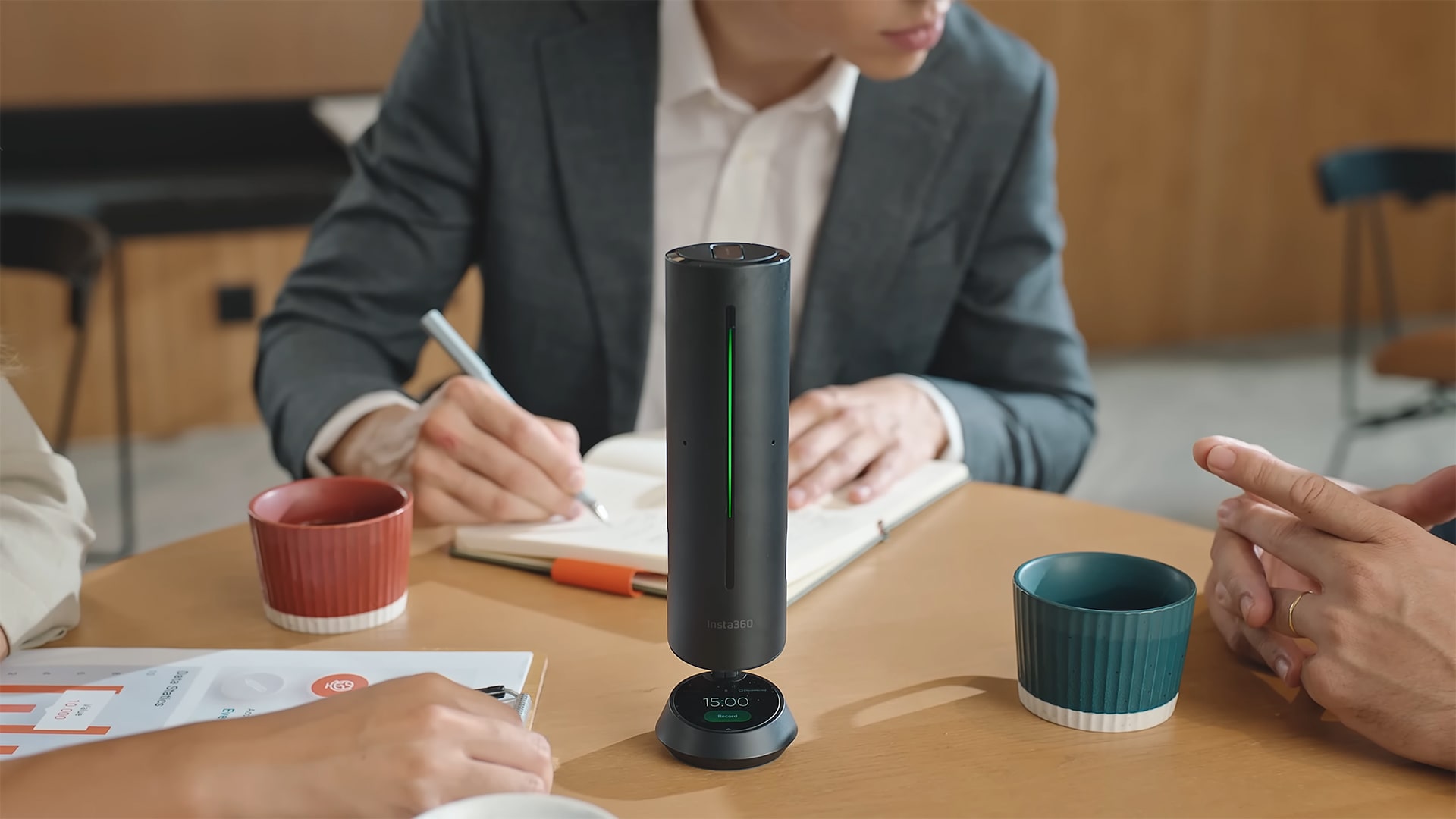
From an audio technology standpoint, Wave’s software layer adds value through its precision in handling complex acoustic environments.
“Within a very small distance dictated by physical hardware constraints, TEALab had to overcome algorithmic precision limits to achieve accurate sound localization and effective noise reduction at this scale,” said Zheng Jincong, hardware product manager at Insta360. “That includes echo cancellation and other components within the underlying 3A algorithms.”
The term 3A refers to three foundational audio algorithms known within Tencent as acoustic echo cancellation (AEC), active noise cancellation (ANC), and automatic gain control (AGC). These algorithms, refined over more than two decades at TEALab, enable microphones to eliminate echo, suppress background noise, and automatically balance volume. They help maintain clear and stable audio quality even on compact array hardware.
Traditional microphone arrays typically perform sound localization on a horizontal plane, mapping sound between the X- and Y-axis. This limits their ability to detect vertical changes in a speaker’s position. In real-world scenarios such as meetings or live broadcasts, speakers often stand, move, or write on a whiteboard, causing frequent shifts in height. The Wave microphone introduces vertical sound source localization to address this limitation.
“Because ours is a spatial microphone array, we can perform sound localization on the Z-axis as well,” Zheng said. “Most products on the market can only locate sound on a flat plane, but ours can detect sound vertically.”
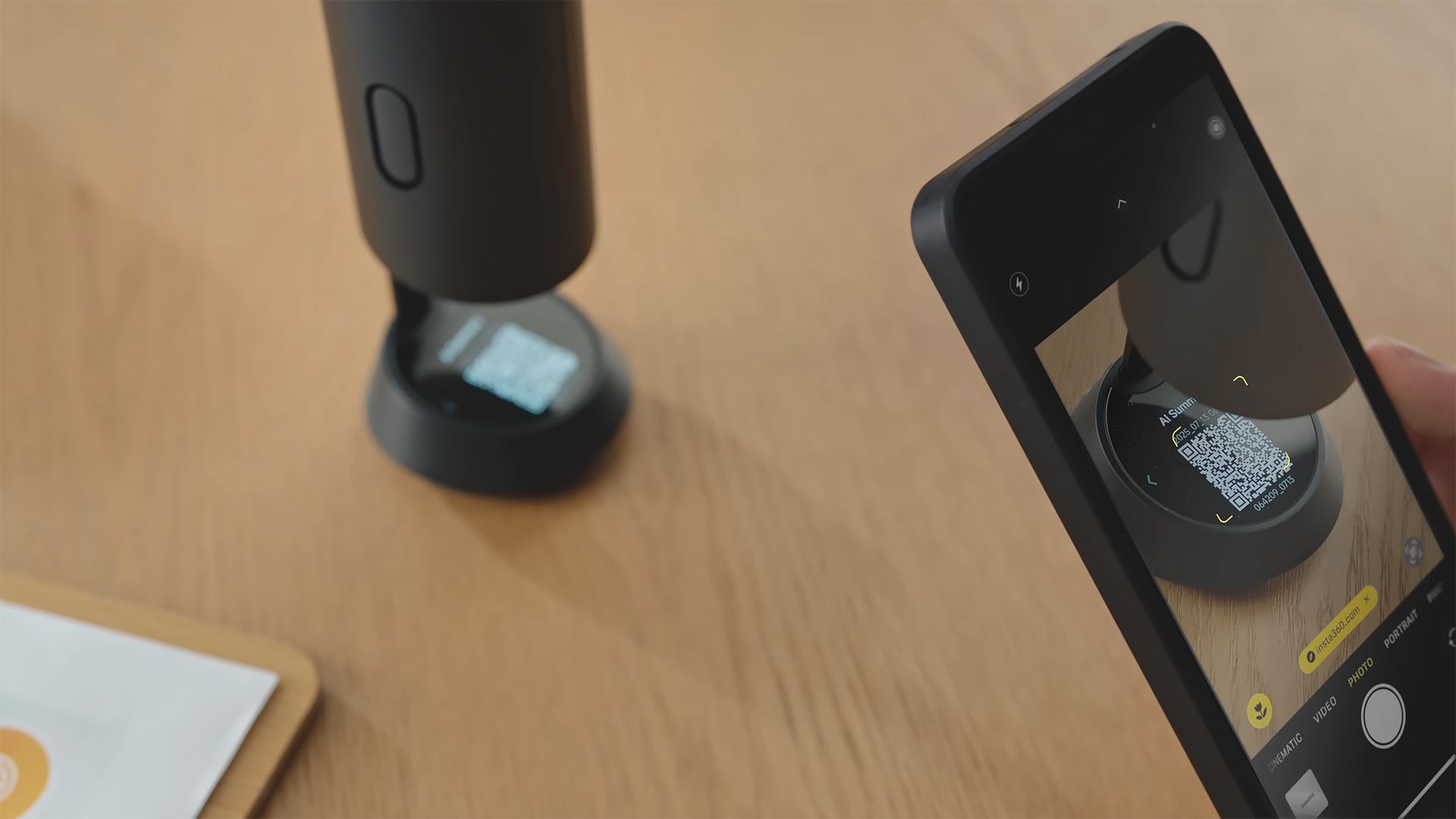
When paired with Insta360’s Link webcam, this feature enables synchronized audio and visual tracking. “When you stand up, the gimbal can follow your voice upward. Without vertical localization, it wouldn’t know how high you’ve moved,” Zheng added.

This vertical tracking capability forms the basis for precise speaker tracking. It allows real-time, three-dimensional alignment between sound movement and camera motion, enabling the gimbal or smart camera to adjust smoothly and accurately. The result is a more natural and responsive experience for remote collaboration and professional video production.
Zheng also noted that before finalizing the product, the acoustic design underwent about six rounds of prototype iteration.
Insta360’s expansion into the indoor meeting and professional audio space extends its expertise in imaging technology. Yuan Yue, chief strategy officer of Insta360, said the company’s guiding principle remains consistent across product lines: creating value and ensuring users see that value as worth paying for.
For Tencent, the partnership turns its audio research into deployable commercial solutions. Shang Shidong, vice president of Tencent Cloud and head of TEALab, said the goal is to transform the algorithmic capabilities that Tencent has developed over more than 20 years into a complete solution. By joining forces with Insta360, he added, the companies aim to create tangible value for users.
KrASIA Connection features translated and adapted content that was originally published by 36Kr. This article was written by Leslie Zhang for 36Kr.