
Li Auto plans to add China Aviation Lithium Battery (CALB) as its third supplier of batteries that power its vehicles, multiple sources told 36Kr. Under the preliminary plan, CALB batteries would first go into Li Auto’s battery electric models.
A person familiar with the matter said the Li i6 could be the first model to use them.
The 2026 Li i6 also appears in the latest vehicle filings from China’s Ministry of Industry and Information Technology. Shandong Li Auto Battery is listed as the manufacturer of both battery pack configurations, with cells supplied by Sunwoda and CALB, respectively. The 2025 Li i6’s battery suppliers were Contemporary Amperex Technology (CATL) and Sunwoda.
The i6 is Li Auto’s mainstay model, with more than 120,000 deliveries in the first half of this year, accounting for over 50% of the company’s sales.
CALB ranks behind only CATL and BYD in domestic traction battery shipments. It is also one of the few Chinese manufacturers other than CATL with expertise in ternary lithium battery technology.
Before joining Li Auto’s supply chain, CALB had long supplied leading EV makers including Xpeng and Leapmotor. In 2025, Leapmotor and CALB established a joint venture, with stakes of 49% and 51%, respectively. More recently, CALB has also entered the supply chains of the Harmony Intelligent Mobility Alliance (HIMA) and Xiaomi.
Li Auto currently sources traction batteries from CATL and Sunwoda. It describes its work with CATL as joint development and its collaboration with Sunwoda as in-house battery development.
Li Auto’s relationship with CATL dates to the launch of its first vehicle, the Li One, when CATL was already a major battery supplier.
In April 2023, Li Auto and CATL signed a comprehensive strategic cooperation agreement. Li Auto’s first battery electric vehicle, the Mega, became the world’s first production model equipped with CATL’s 4C Qilin battery. In September 2025, the two companies signed another comprehensive strategic cooperation agreement covering five years.
Also in September 2025, Li Auto and Sunwoda registered a 50:50 joint venture to produce Li Auto-branded batteries. Li Auto leads the design of the battery products, processes, and materials, while Sunwoda primarily serves as the original design manufacturer, or ODM, responsible for manufacturing the batteries.
More recently, Li Auto moved to invest RMB 2.65 billion (USD 394.6 million) in Sunwoda’s EV battery business, SEVB. Once the transaction closes, the Li Auto entity making the investment will become SEVB’s second largest shareholder.
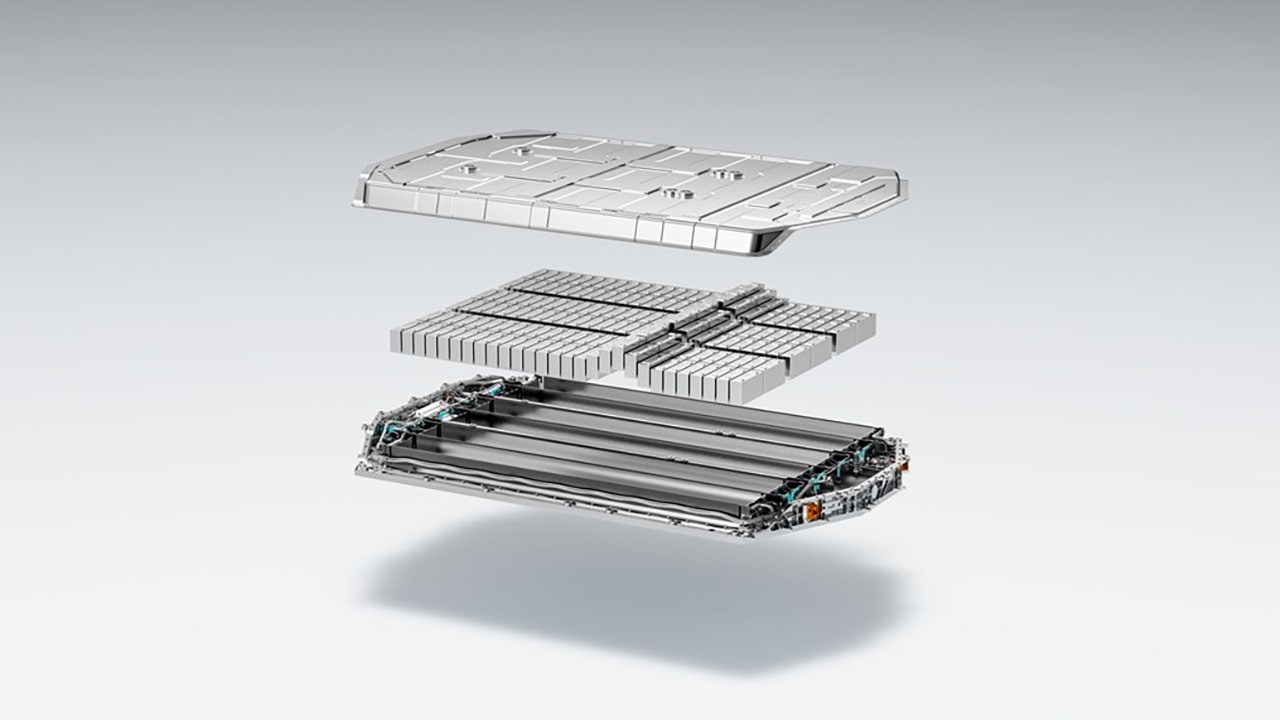
This year, Li Auto began installing the batteries developed with Sunwoda in vehicles at scale.
On September 7, Li Auto announced that its in-house batteries would eventually be used across its entire vehicle lineup. According to the company, Li Auto-branded batteries are already installed in the Li L8, Li L6, and Li i8.
In the fourth quarter of this year, the next-generation Mega, the all-new Li i9, and the 2026 Li i6 will also begin using Li Auto-branded batteries, in line with their product and delivery schedules.
The first batch of the next-generation Mega uses CATL’s 5C ternary lithium batteries. Customers who finalize their orders at or after 3 p.m. on September 7 will be assigned to delivery batches equipped with Li Auto-branded batteries. The all-new i9 will also initially offer CATL’s 5C ternary lithium batteries, before switching to Li Auto’s in-house 5C ternary lithium batteries once production of its own-brand batteries has ramped up.
As automakers grow, securing battery supply becomes increasingly important. Battery sourcing affects both production schedules and vehicle costs.
Using several suppliers helps automakers secure supply and negotiate prices. Those considerations drove Li Auto’s work with Sunwoda on its own-brand batteries and underpin its planned addition of CALB.
An industry source close to CALB told 36Kr that Li Auto and CALB had held discussions as early as 2022.
Sunwoda ultimately joined Li Auto’s supply chain first. An industry source close to Li Auto said one reason was Sunwoda’s willingness to collaborate closely on technology and offer Li Auto an equity stake.
Li Auto is counting on several major launches to support a turnaround in 2026: the Li L9 Livis, the next-generation Mega, and the i9.
At the same time, competition in the automotive market is intensifying, while rising prices for lithium carbonate, memory chips, and other inputs are pushing up supply chain costs.
Those pressures make reliable deliveries and lower costs more urgent, strengthening the case for adding CALB.
Other automotive businesses, including HIMA and Xiaomi, are also diversifying their battery suppliers.
Within HIMA, Luxeed and Shangjie have long been CALB customers. This year, Aito, which had relied exclusively on CATL for years, also brought in two second-tier battery suppliers, CALB and Gotion High-tech. CALB will supply Aito with an 81-kilowatt-hour battery pack for the Aito M6.
Xiaomi already sourced traction batteries from CATL and FinDreams Battery. On September 4, it announced a strategic partnership with CALB and SEVB for its Longjia battery. The battery system will be used throughout Xiaomi’s SkyNomad extended-range vehicle lineup.
As in Li Auto’s collaboration with Sunwoda, Xiaomi leads the development of its battery pack specifications and is closely involved in selecting cell materials and designing formulations for Longjia batteries. CALB and Sunwoda work with it as battery partners.
Cost and competitive pressures are pushing Li Auto, HIMA, and Xiaomi to launch their own battery brands, buy cells from second- and third-tier manufacturers, and oversee more of the supply chain directly. That could give them greater control over one of a vehicle’s most important components.
KrASIA features translated and adapted content that was originally published by 36Kr. This article was written by Fan Shuqi for 36Kr.
Note: RMB figures are converted to USD at rates of RMB 6.72 = USD 1 based on estimates as of September 14, 2026, unless otherwise stated. USD conversions are approximate and, where appropriate, rounded for ease of reference. They may not fully match prevailing exchange rates.