
Pongbot found an audience with its first tennis ball machine. Its next product is more ambitious: a robot intended not only to feed balls but to coach players across several racket sports.
The company has also drawn attention from private investors. In the first half of 2025, it completed three funding rounds totaling a nine-figure RMB sum. Pongbot said its products have attracted more than 300,000 users worldwide and served more than two billion balls.
Specialized hardware companies, however, have little time to grow quietly. New entrants are crowding into tennis equipment, including Chinese hardware startups and established overseas manufacturers pursuing professional users.
Pongbot had considered expanding beyond tennis for some time. In May, it introduced Aura, its first multisport coaching robot, moving from tennis training equipment toward machines designed for several sports.
Aura raised more than USD 1 million within five hours of its Kickstarter launch. The campaign has since collected nearly USD 4 million.
The premise is simple. Instead of requiring users to buy separate machines for tennis, pickleball, and padel, Pongbot wants one device to support all three. Artificial intelligence is meant to expand both the number of exercises the machine can provide and the range of players it can serve.
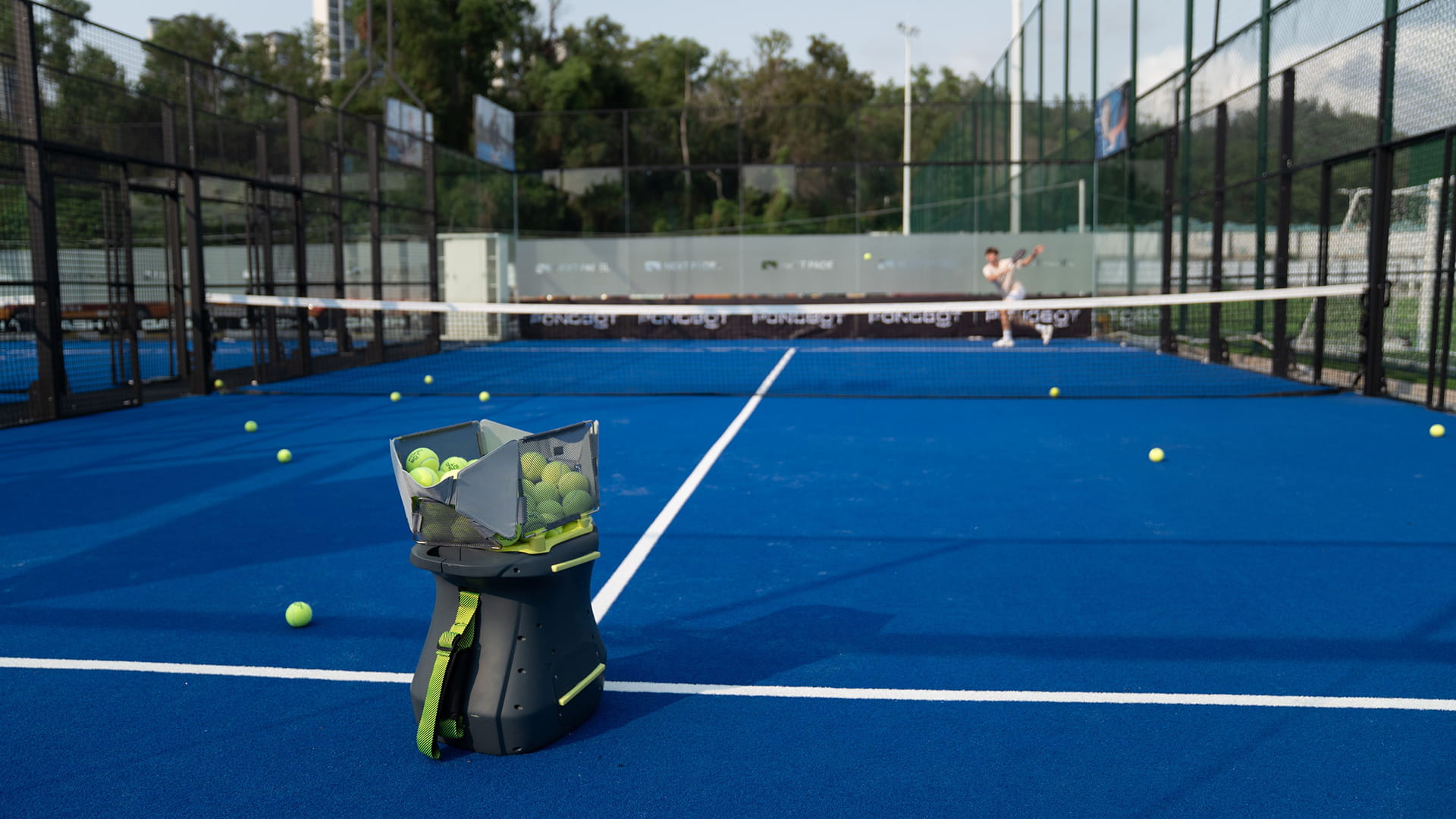
One machine, several sports
Aura occupies an unusual place in Pongbot’s product line.
The earlier Pace series was built for serious tennis players. It can launch balls at speeds of up to 130 kilometers per hour and emphasizes speed, spin, and placement.
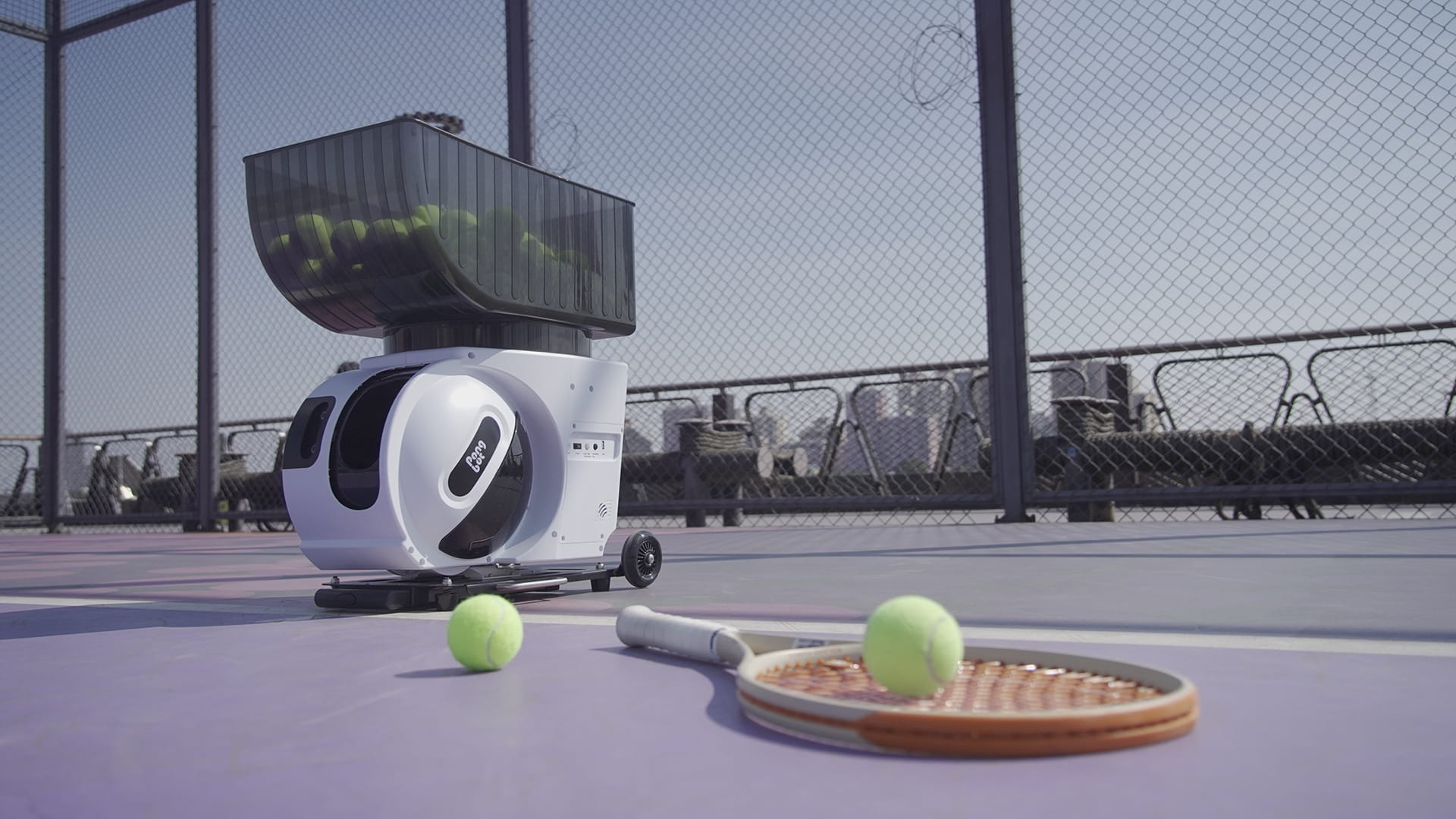
Aura weighs seven kilograms and can fit in a backpack. Its coaching system is intended for a broader population of recreational racket sport players.
A conventional coach does more than feed balls. The coach watches each movement, identifies a problem, and changes the next exercise accordingly. Every ball becomes both a test and a response.
Most computer vision products work differently. They record a session, analyze it afterward, and produce a report. By then, the practice is over.
Aura is intended to respond while the player is still on the court. It observes each shot, assesses the movement, and changes the next delivery. The aim is to reproduce the continuing exchange between a coach and a student rather than provide only a post-session analysis.
Software alone cannot make one machine work across several sports. The hardware must also accommodate balls with different weights, surfaces, and flight characteristics.
Even tennis balls vary. There are pressurized match balls, pressureless training balls, and lower-compression balls for children and beginners.
Pickleballs come in 16- and 24-hole designs. The number of holes affects weight, air resistance, and trajectory.
A conventional ball machine is usually designed around a standardized ball. Substituting another type can cause deformation, jams, or an inaccurate launch.
For one set of feeding and propulsion components to handle several kinds of balls, Pongbot had to redesign the machine’s mechanical structure.
Before launching a ball, Aura adjusts the distance between its wheels and the way they accelerate according to the sport.
Tennis balls require greater pressure and faster wheel speeds to produce speed and spin. Pickleballs are lighter and encounter more air resistance, so Aura switches to a separate set of calibrated settings.
“The technical barrier for an all-in-one device is not simply whether it can launch the ball,” Pongbot founder and CEO Zhang Haibo told 36Kr. “What ultimately determines whether the product is useful is the robot’s ability to control the trajectory and spin of different types of balls.”
Because each ball behaves differently in flight, the machine cannot use the same motion settings for every sport.
Pongbot therefore built a separate control model for each category, seeking to keep the machine’s deliveries stable after a user switches sports.
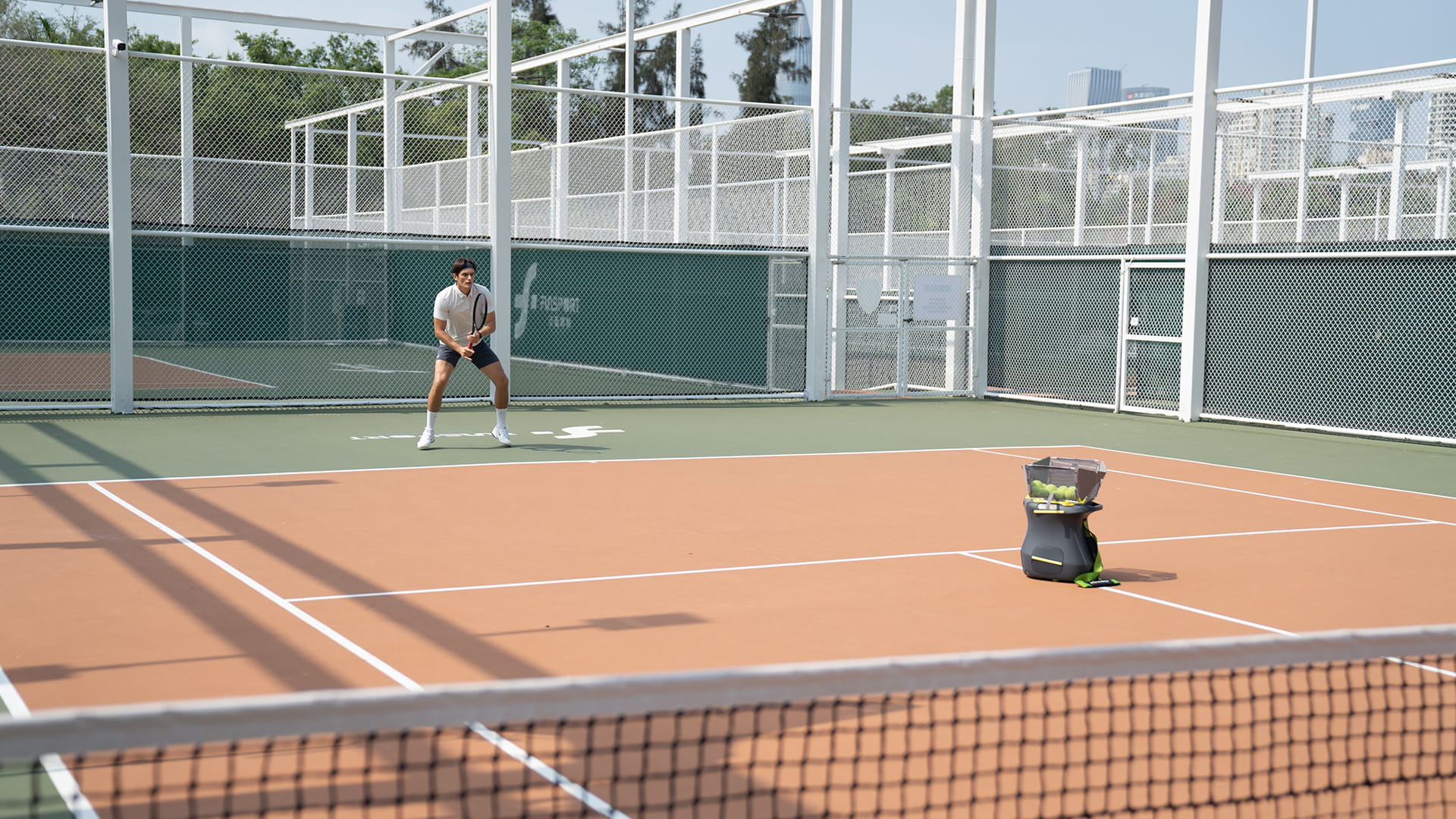
From observation to intervention
If the launching system is Aura’s “hand,” two other components support its coaching function: visual perception and automated decision-making.
The machine must record a swing and follow the ball’s path. It must then interpret what happened and decide how the next ball should be delivered.
Aura uses Spotter, a detachable module with two cameras. It records at 120 frames per second and provides ten TOPS (tera operations per second) of computing capacity on the device.
Combined with language and speech models, Spotter connects the cameras with Pongbot’s sports-analysis system, allowing the machine to “see, think, and coach.”
A camera-based training product can identify a player’s movement and offer suggestions without relying on specialized equipment. Its limitation is that it cannot alter the exercise as it happens.
Aura begins not with the analysis but with the feed.
Pongbot’s large model, trained for sports analysis, records where the ball lands and attempts to explain why. Was the backswing late? Was the contact point too far from the body? Did the player fail to transfer their weight in time?
The system communicates its assessment through voice prompts after each shot. It then adjusts the next sequence of balls.
For Zhang, coaching must begin with the feed. A machine should observe, assess, and adapt during practice rather than wait until the session has ended.
That process also generates data. Pongbot estimates that, once Aura reaches the market, its machines could collect more than five million hours of useful sports-interaction data each year. The estimate is the company’s own, and the value of the data will depend on its quality, consistency, and users’ consent to its collection.
Pongbot describes Aura as the world’s first “all-in-one” coaching robot for multiple sports. The idea nevertheless divided the company during development.
Zhang recalled that employees worried users might see Aura as a jack of all trades and master of none. Partners and investors raised the same concern.
He continued to support the product for two reasons:
- Sports equipment is usually sold on the assumption that a person first chooses a sport, then buys the equipment required to play it.
- For beginners, the order can feel reversed. They are expected to buy equipment before they know whether they will remain interested in the sport.
Reports from the Professional Pickleball Association, Monitor Deloitte, and other organizations have estimated that pickleball participation has grown by more than 30% a year in North America. The number of padel courts in Europe has nearly tripled in five years, while tennis still has the largest global participation base among racket sports. The figures require links to the original reports before publication.
The three sports have meaningful differences, but their courts, movements, and beginner populations overlap.
Aura supports all three kinds of balls and allows users to activate each sport separately.
“You don’t have to make a decision before buying the device,” Zhang said. “You can start with tennis. If you decide one day that you want to try pickleball, you can unlock it by paying the corresponding subscription fee in the app.
“For roughly the cost of a single introductory lesson, users can find out whether they are interested in another sport.”
According to Zhang, nearly every customer selected a version that included AI coaching, while more than half chose the multisport option. The company did not disclose the number of customers represented by those percentages.
The response may reflect a familiar tendency in consumer purchases. People do not necessarily use every feature in a multipurpose product, but the availability of those features can make the purchase seem more worthwhile.
“It sends a signal,” Zhang said. “An all-in-one function means gaining access to several sports for the cost of one device. The value-for-money advantage is self-evident.”
“Users want to have that option, even if they do not need it right now.”
RELATED ARTICLE
A software business inside a machine
A multipurpose product may also offer Pongbot a less expensive way to enter several markets.
Aura uses a standardized mechanical platform. Most adaptations are made through adjustments to the wheels and changes to software settings. The same machine can therefore support tennis, pickleball, padel, and potentially other sports.
This allows Pongbot to reuse components, simplify production, and spread development costs across several groups of customers.
The hardware brings users into the product. Software determines how many sports and training functions they can access.
A customer can buy a version that supports one sport, then activate pickleball or padel through a monthly or annual payment in the app.
For Pongbot, the arrangement creates continuing revenue without requiring the customer to buy another machine. It also allows training records from several sports to remain within one system.
“A user might learn tennis with Aura today, and that data will accumulate in Pongbot’s system,” Zhang said. “Three months later, if the user wants to try pickleball, there is no need to buy another machine. They only need to pay to unlock it through the software.
“The device has not changed, the user has not left, and the data continues to grow.”
The commercial appeal is clear. Pongbot can sell one machine, charge for later software access, and build a proprietary record of how customers train.
Whether that record becomes a durable advantage will depend on more than volume. The system must produce feedback that users find accurate, timely, and useful. It must also handle personal data in a way that earns their trust.
Players are unlikely to value a machine merely because it contains many functions. They are more likely to value one that follows a practice session, recognizes a recurring problem, and changes the next exercise in a helpful way.
Pongbot is trying to combine hardware, software, and training records in a consumer product that improves as it gathers more information about the player.
Aura’s larger claim is therefore not that one machine can launch several kinds of balls. It is that one machine can follow a player from one sport to another and continue learning how that person moves.
The idea may not settle how AI should be used in sports equipment. But it raises a useful possibility: Beginners could move among several sports without buying a new machine each time, while the same system remembers every swing.
KrASIA features translated and adapted content that was originally published by 36Kr. This article was written by Huang Nan for 36Kr.